Este trimestre, en nuestras clases de Tecnología de 3º ESO del Colegio Ntra. Sra. del Carmen de Valladolid, nos hemos vuelto a hacer una pregunta muy sencilla, pero muy importante: ¿el plástico es bueno o es malo? Y la respuesta no es tan fácil. El plástico forma parte de nuestra vida diaria y nos ayuda en muchas cosas… pero también está causando graves problemas al planeta. Por eso hemos querido mirarlo “cara a cara” en el aula, tocarlo, clasificarlo y pensar juntos qué podemos hacer mejor.
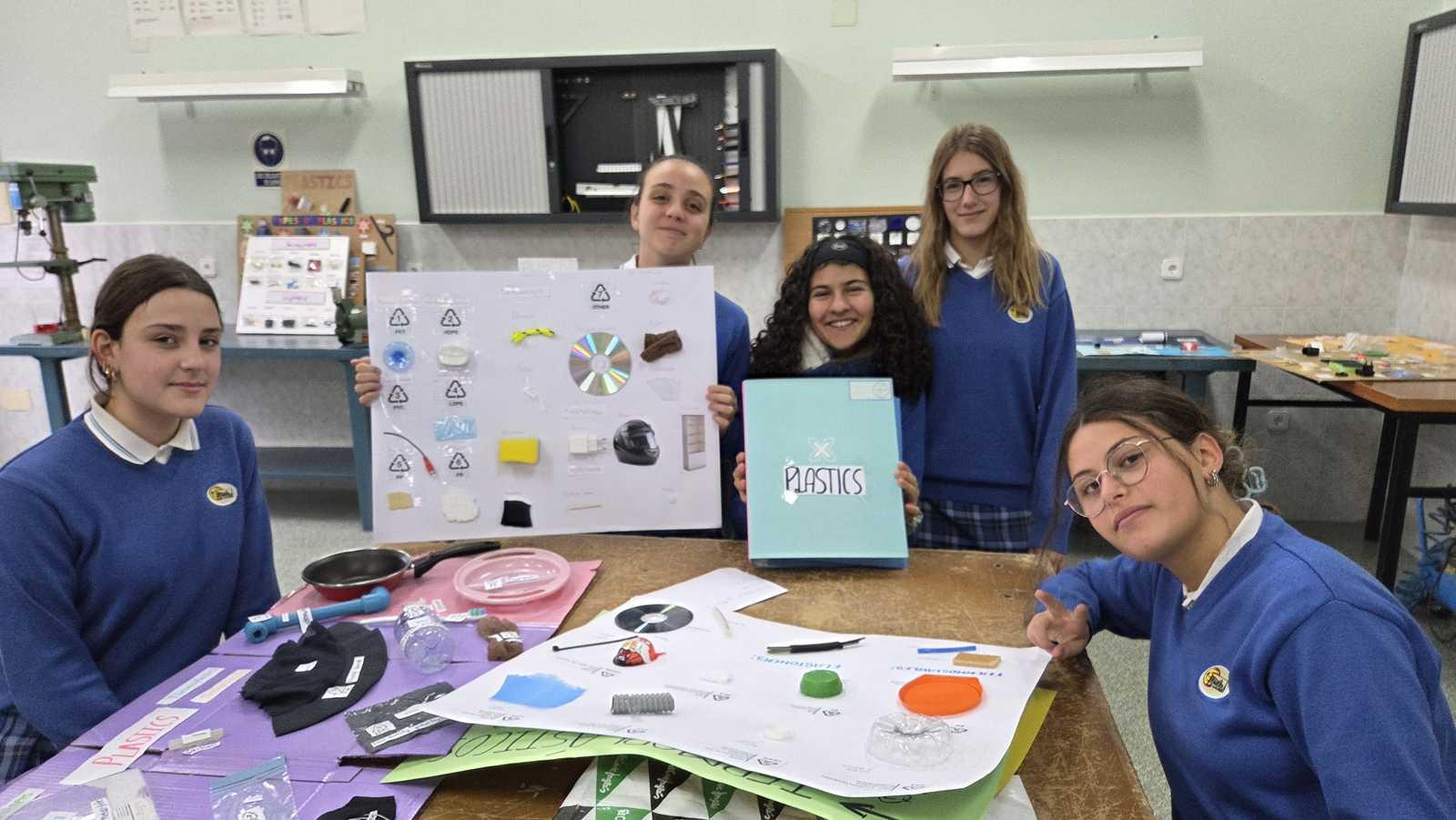
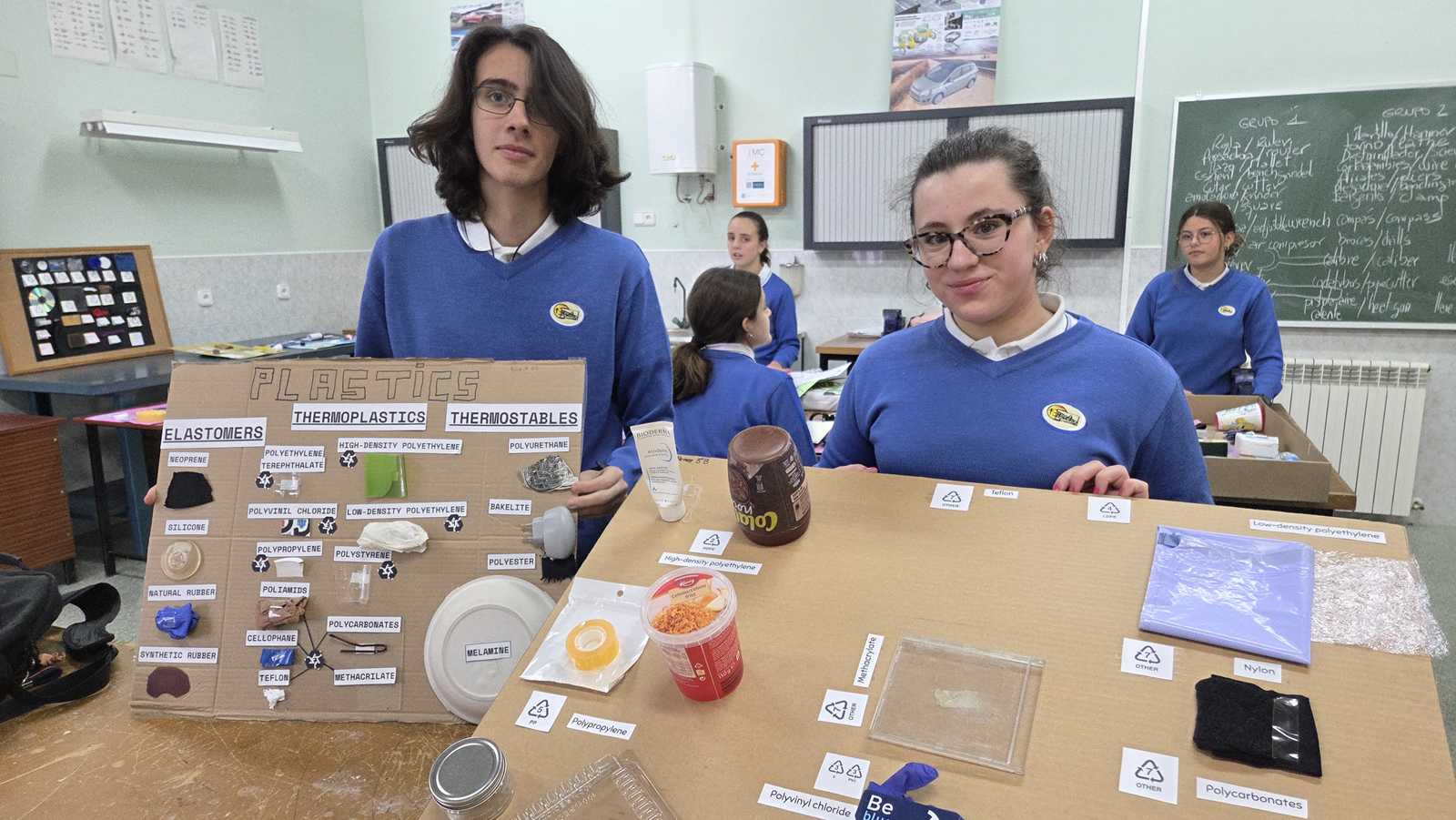
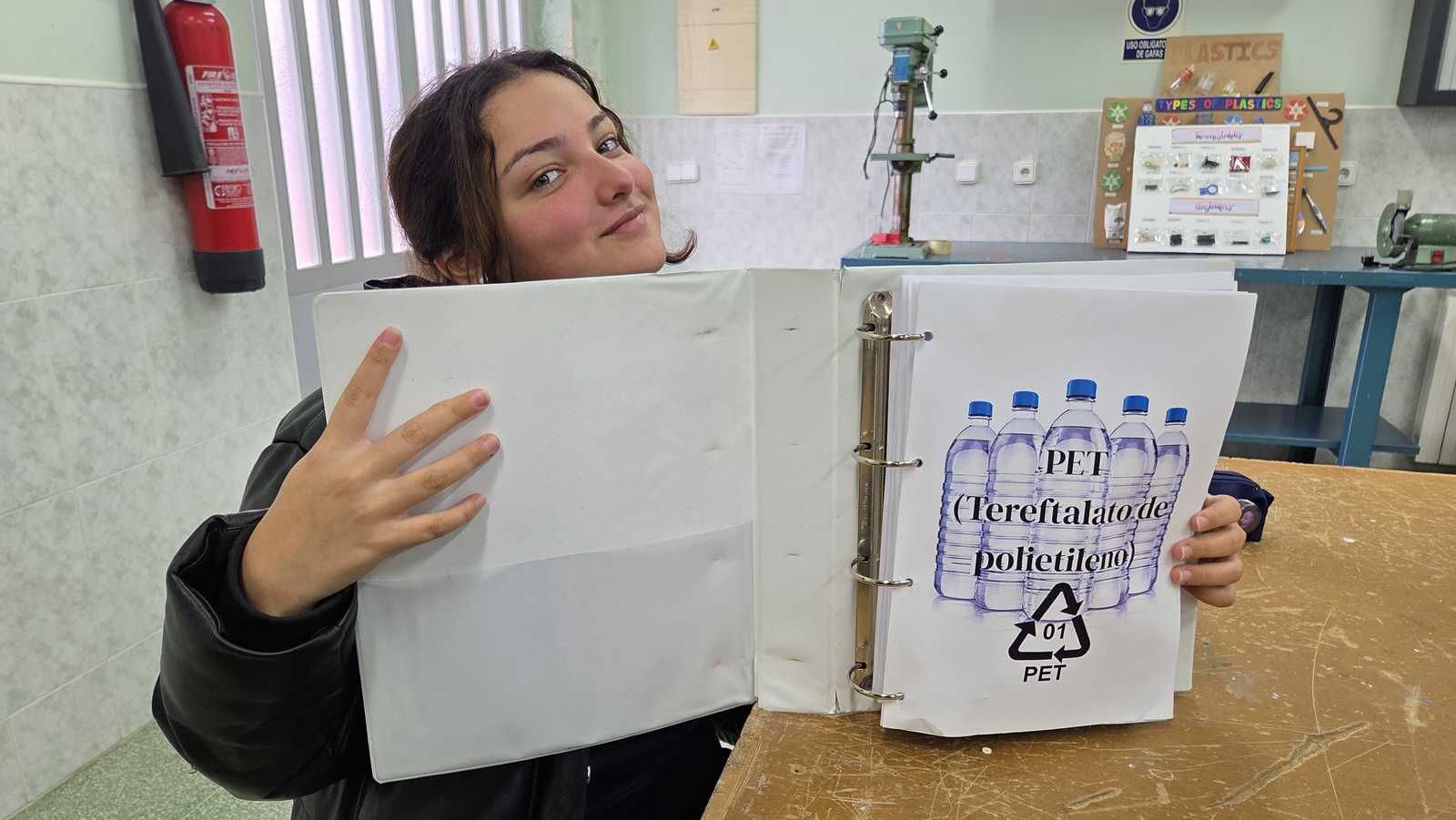
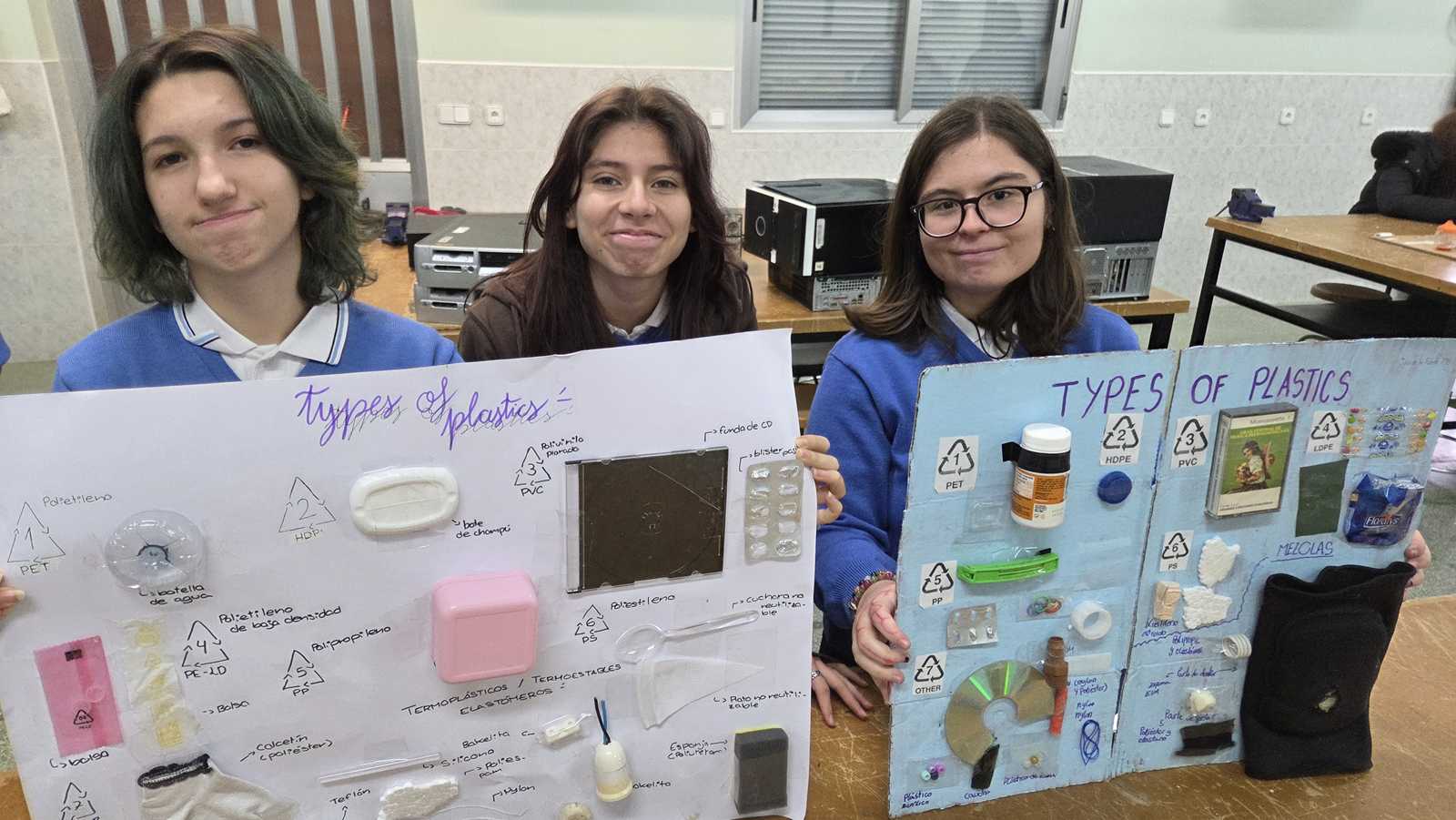
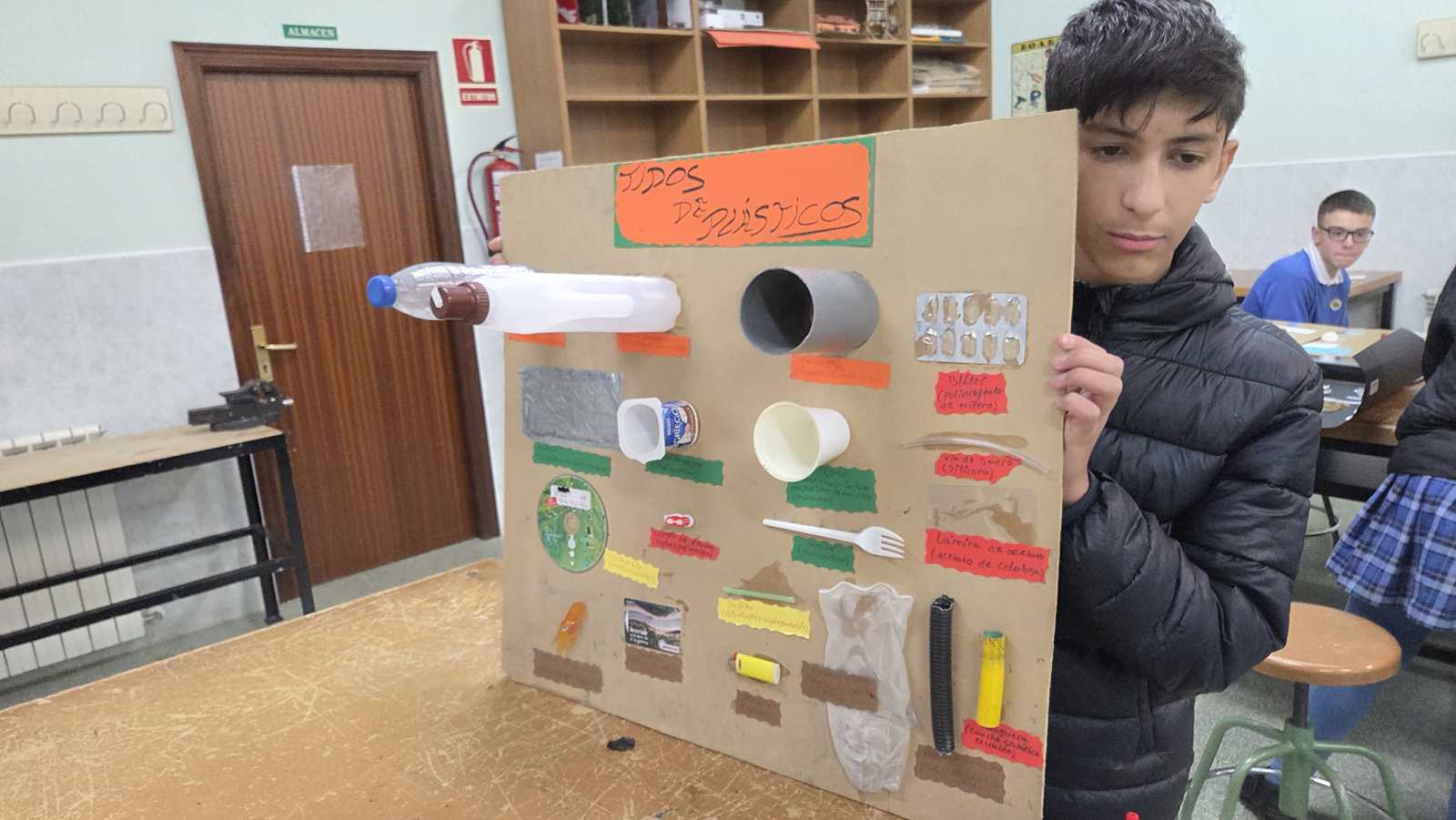
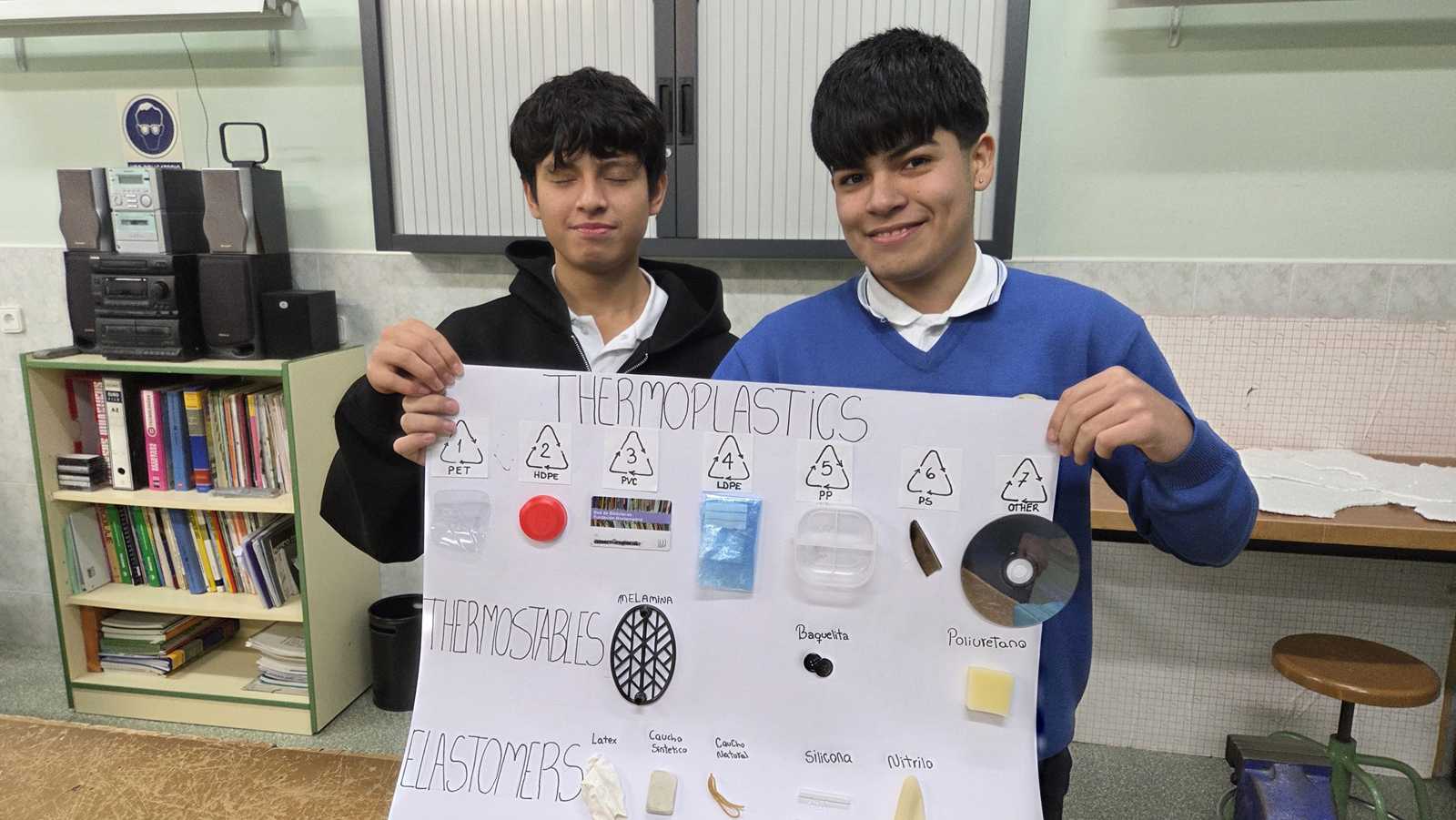
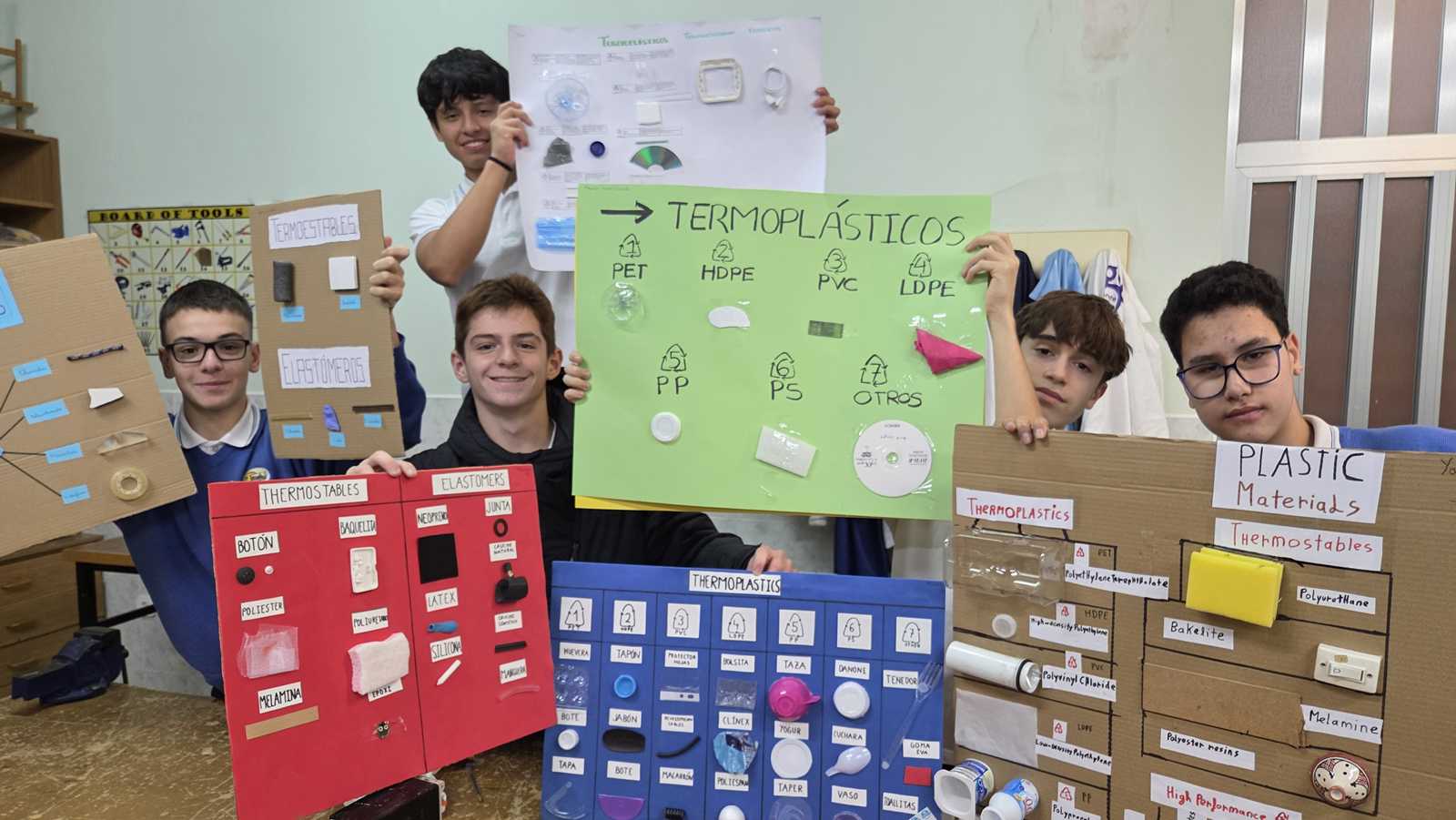
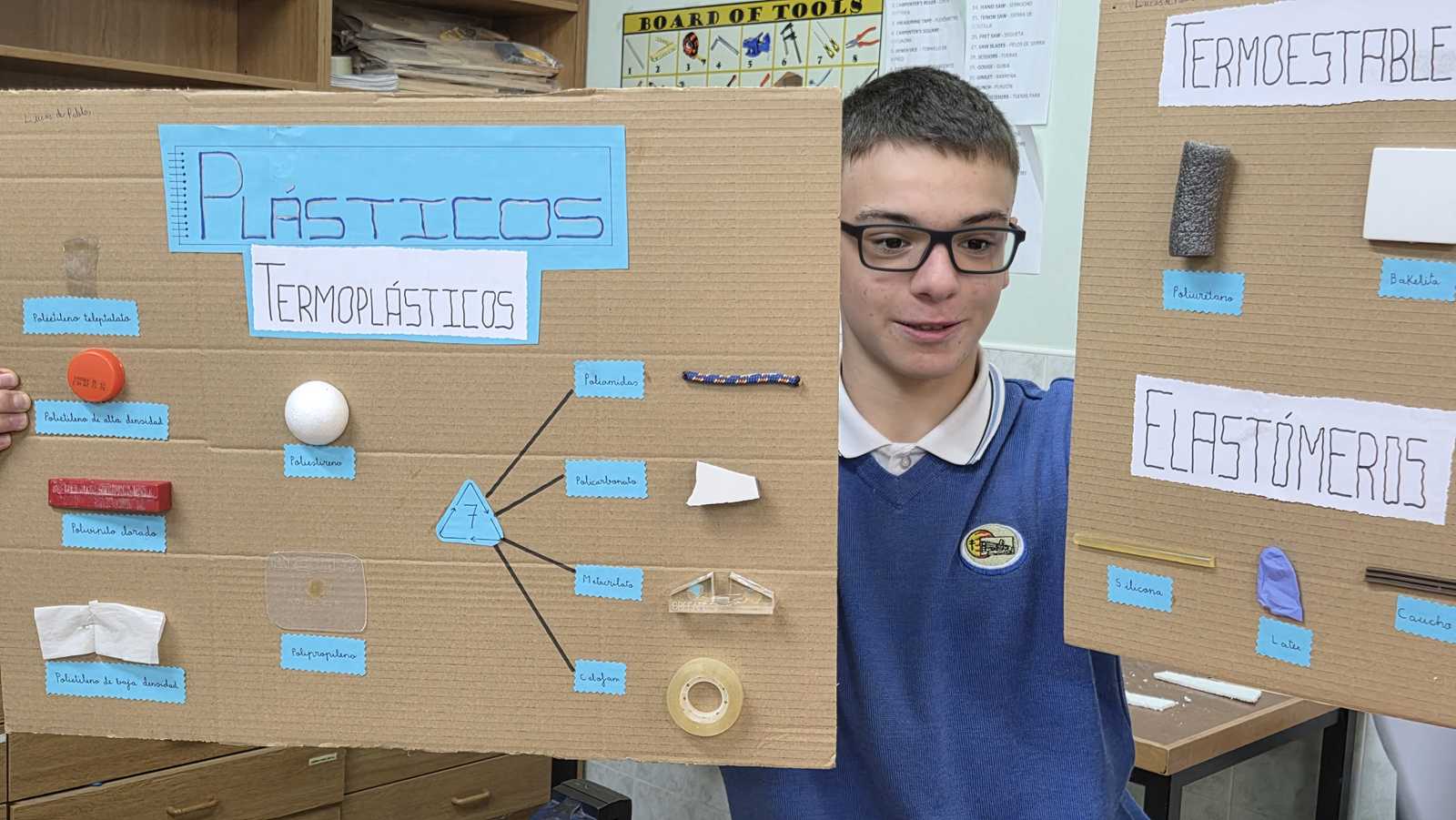
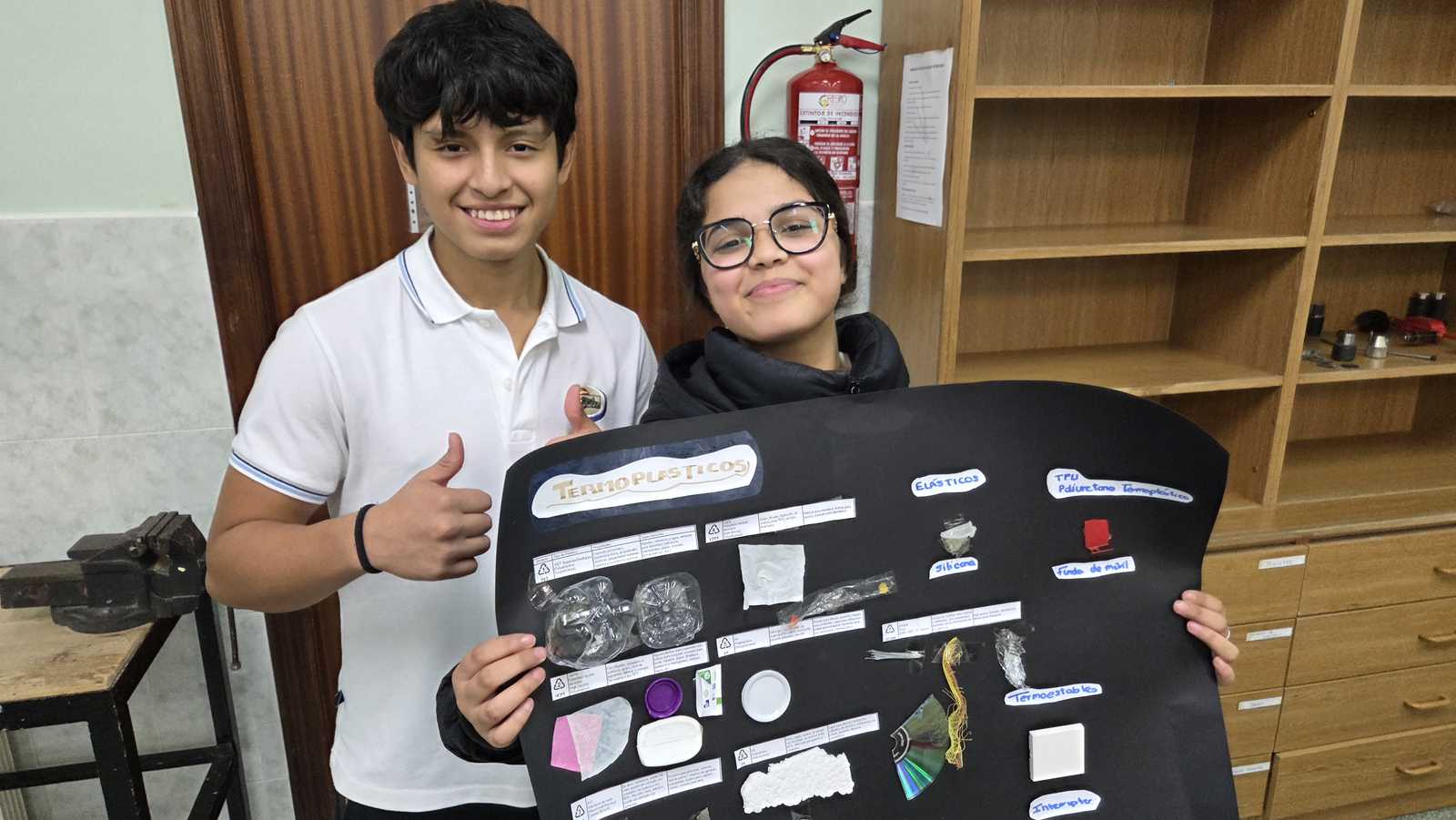
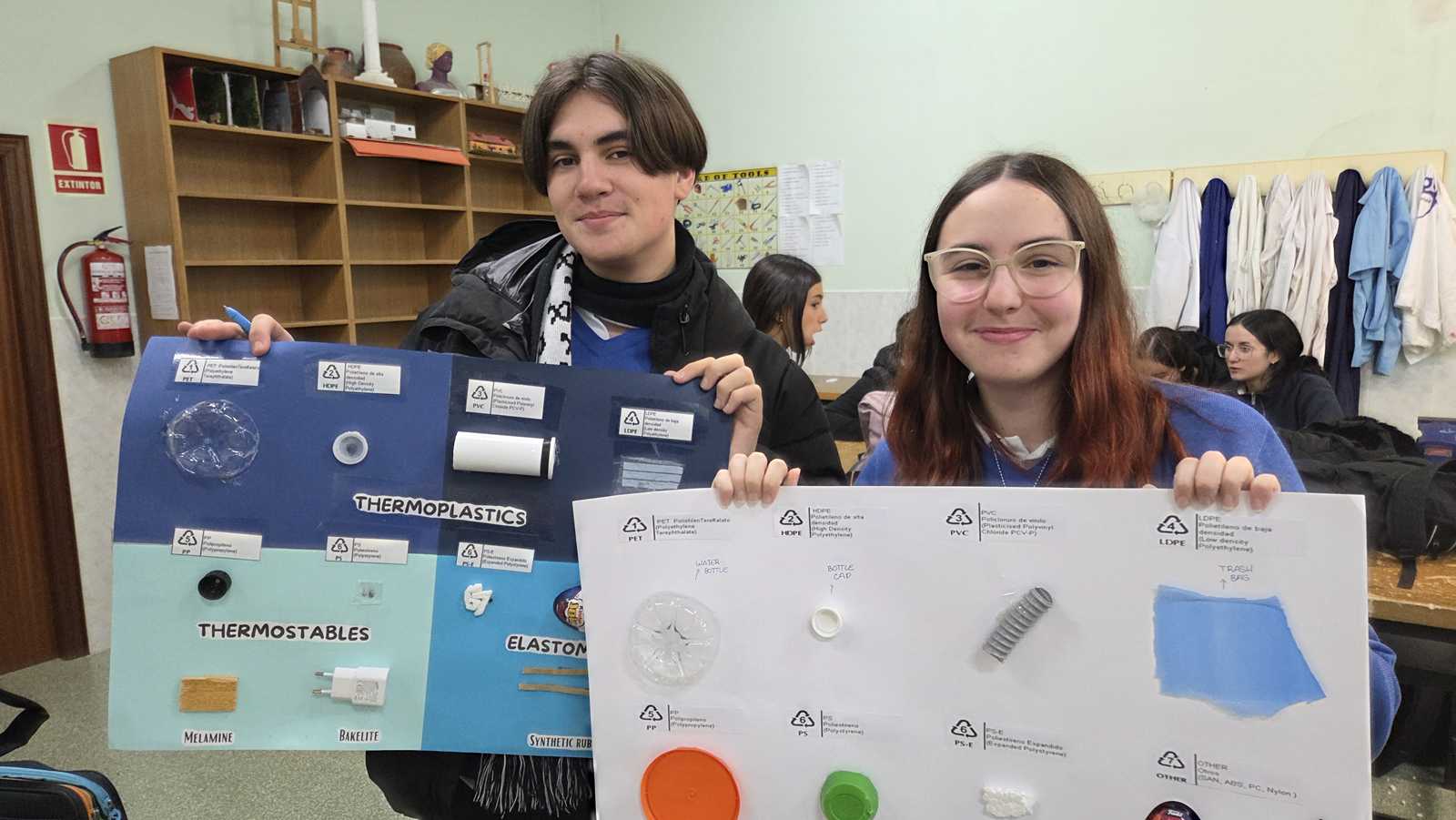
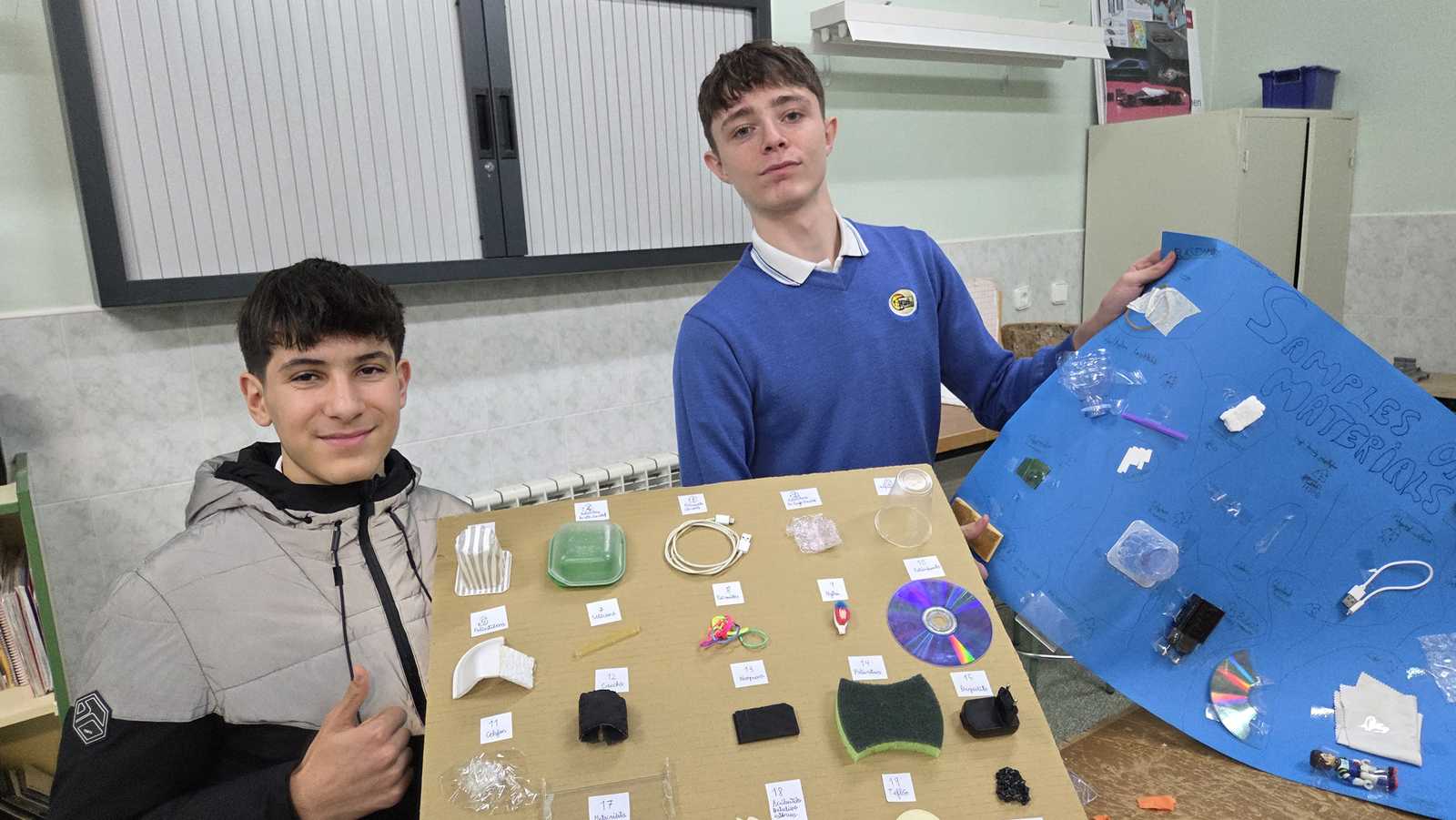
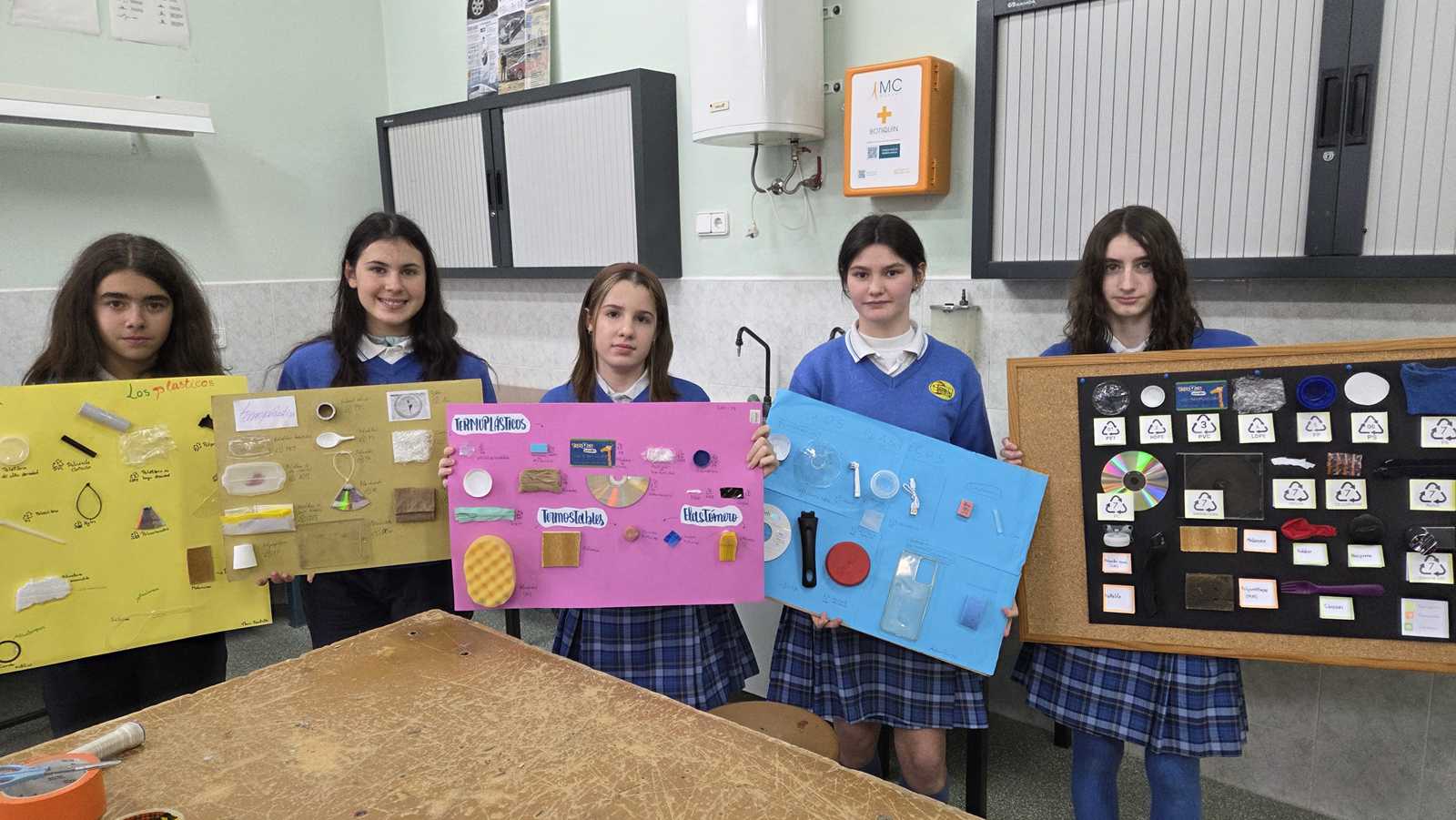
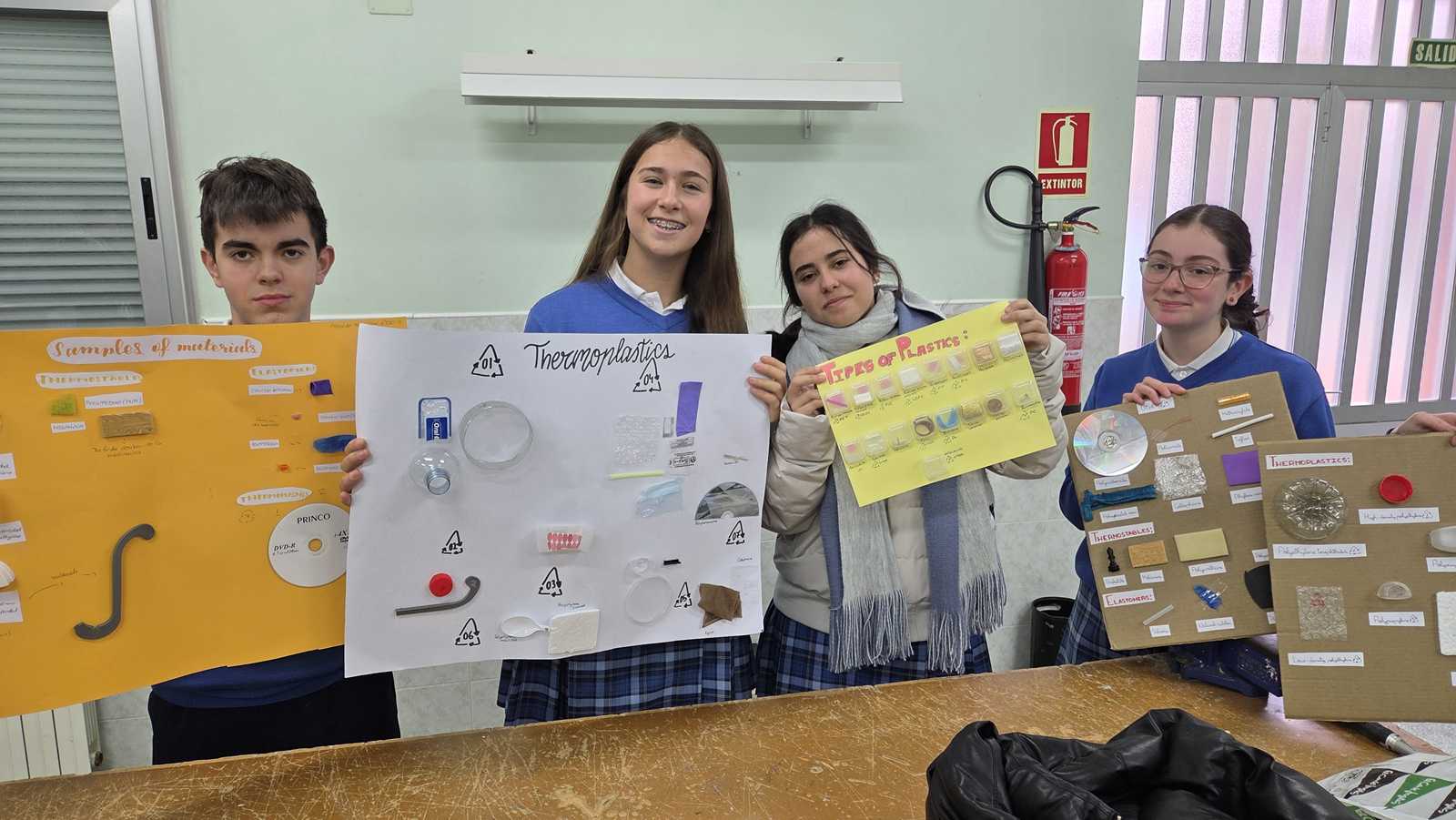
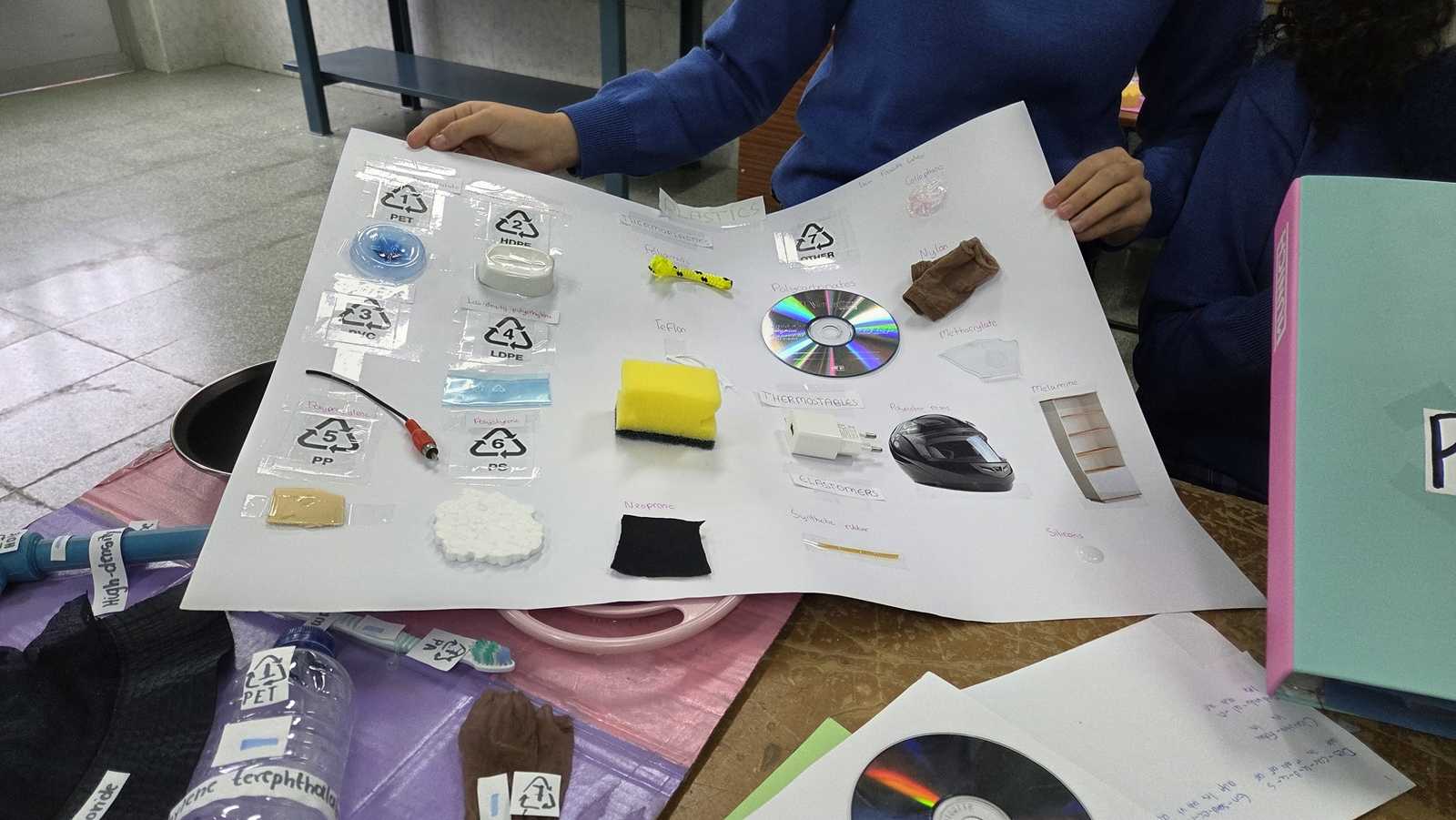
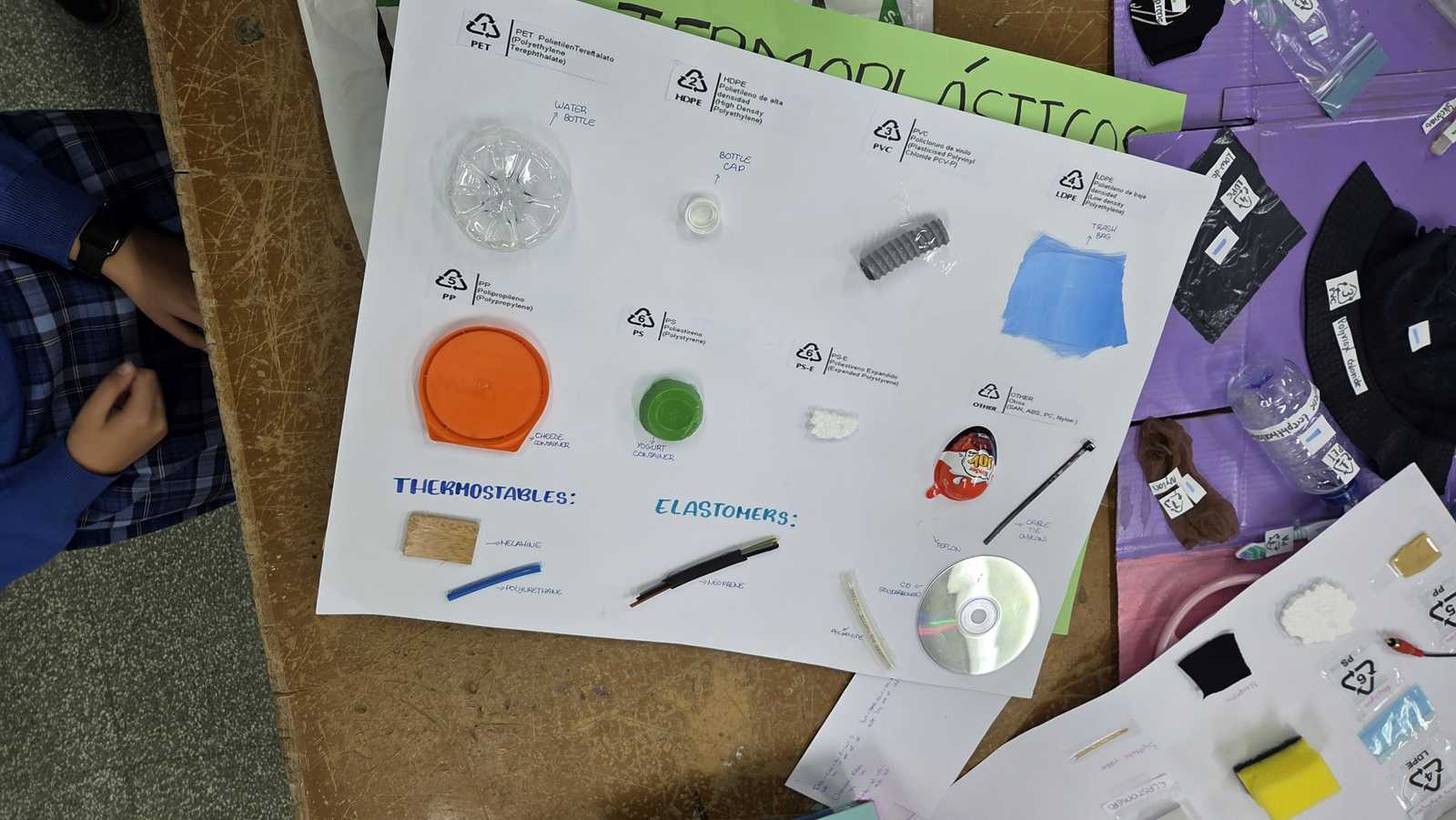
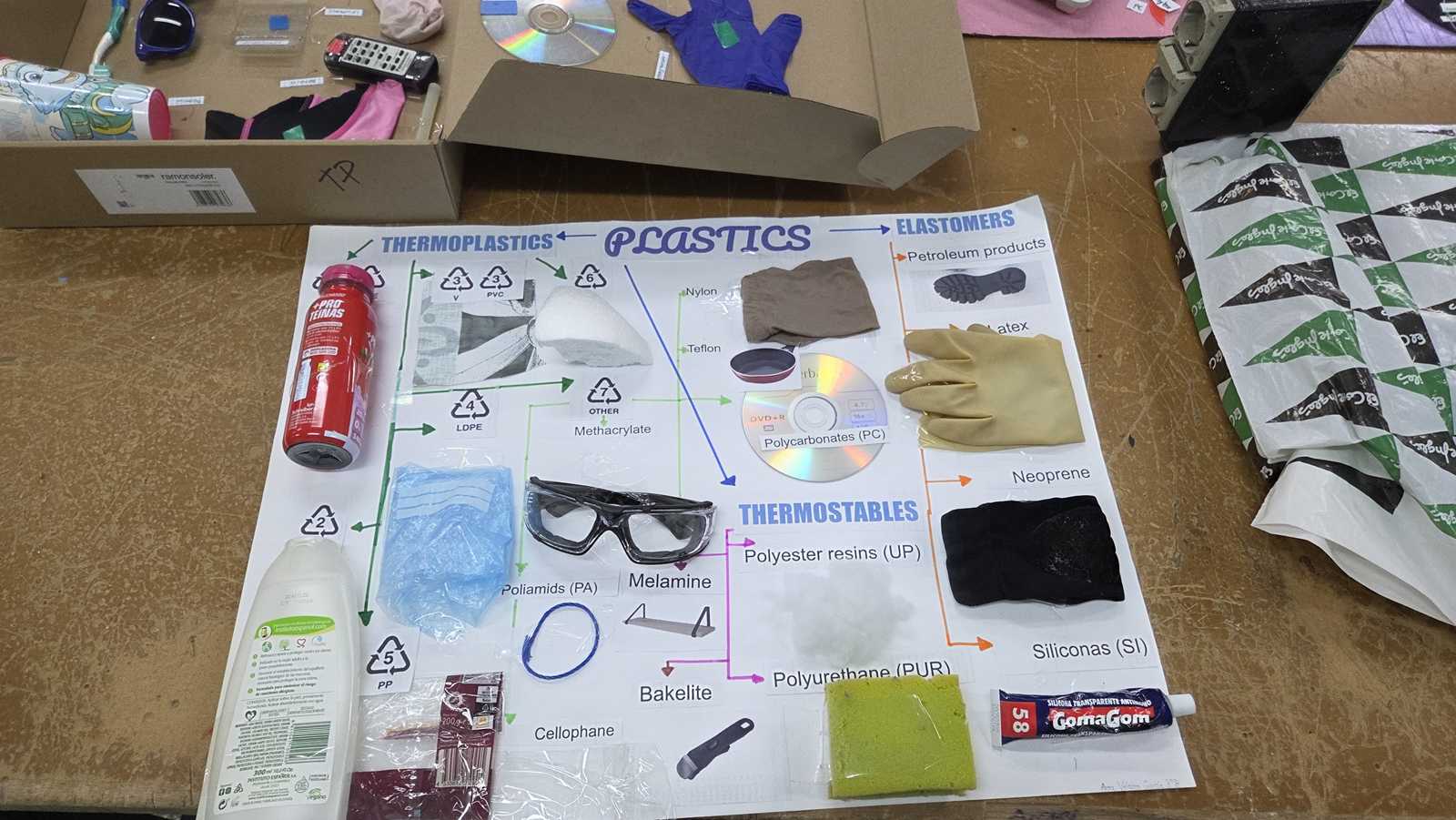
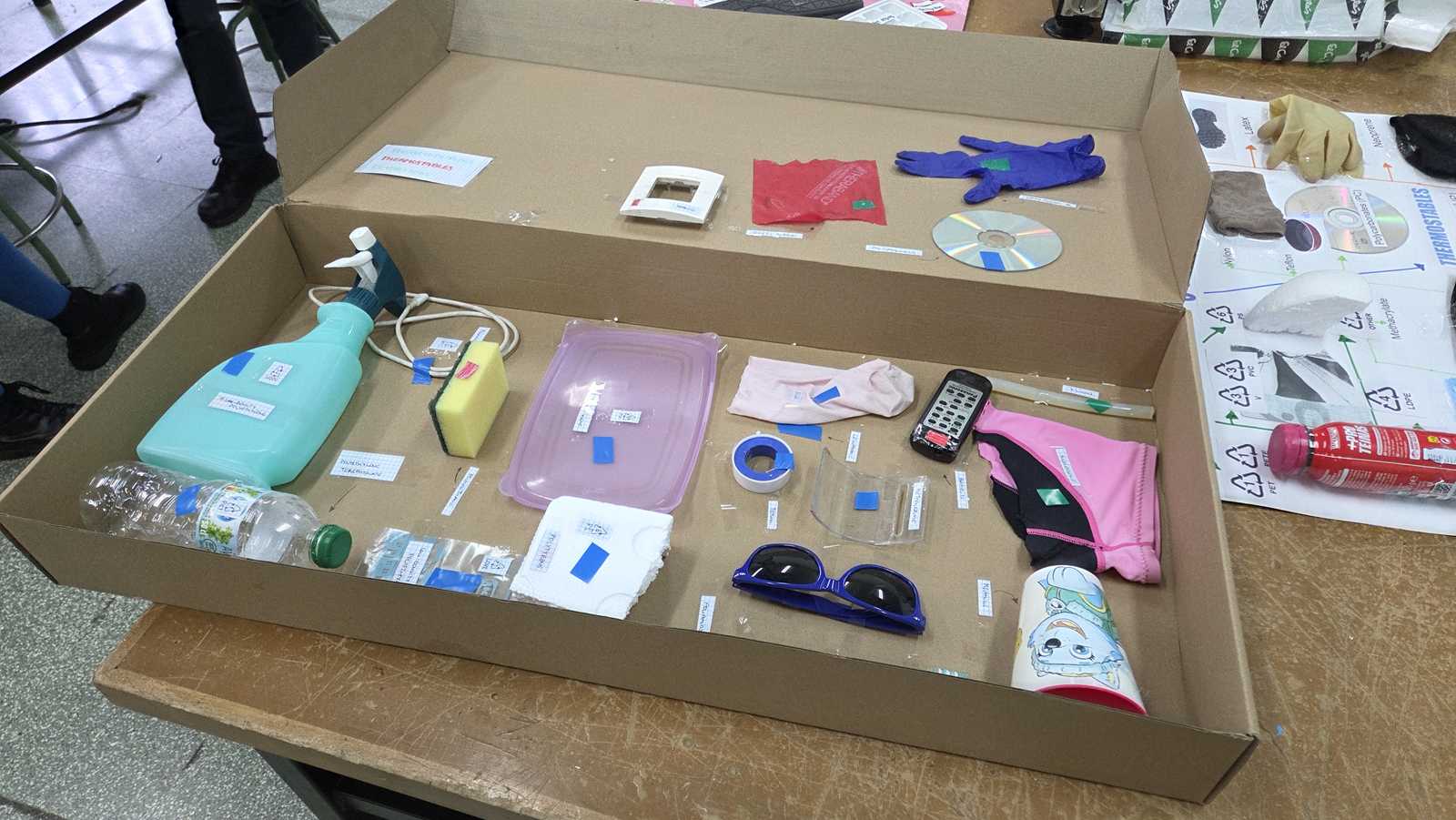
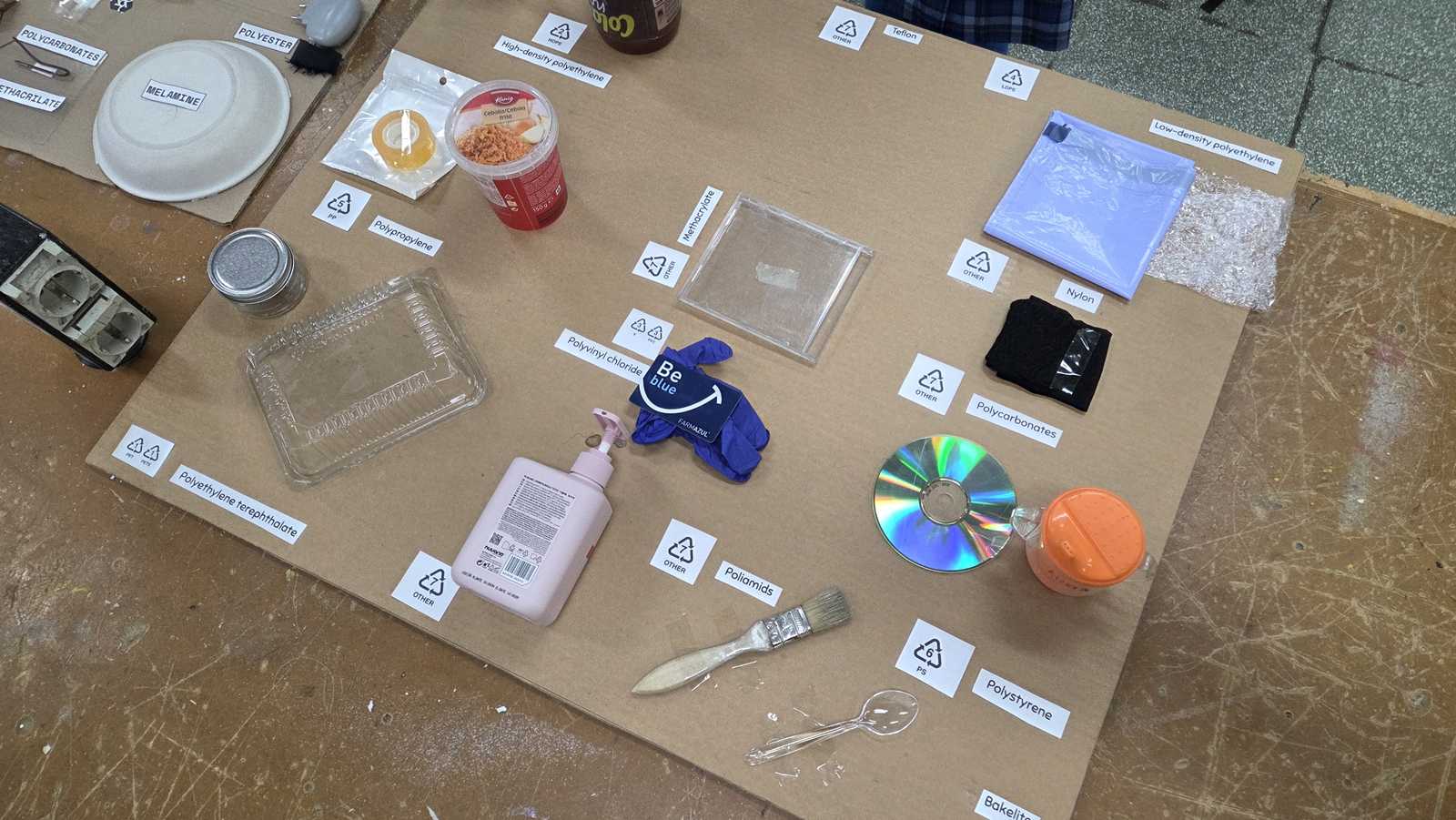
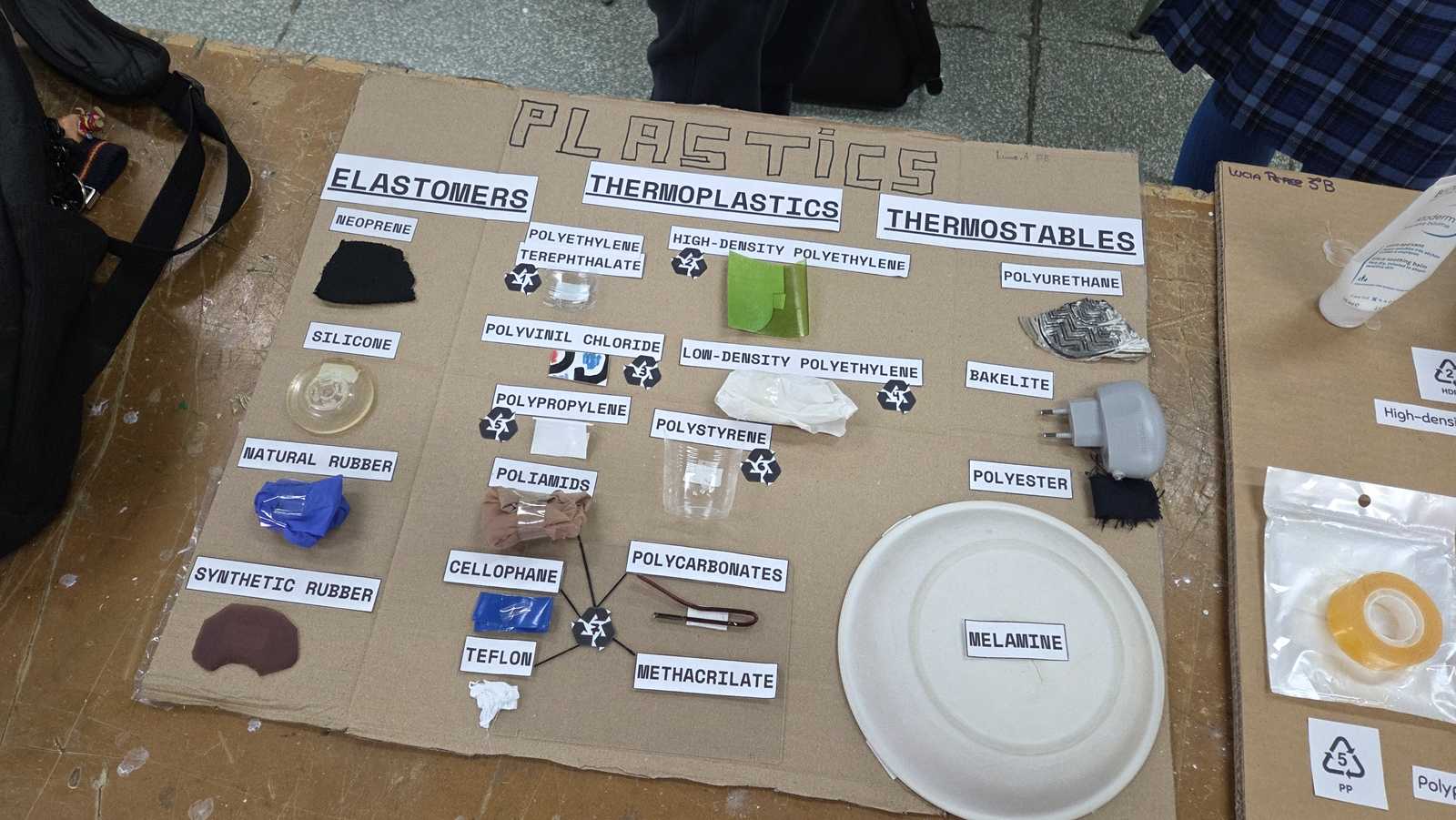
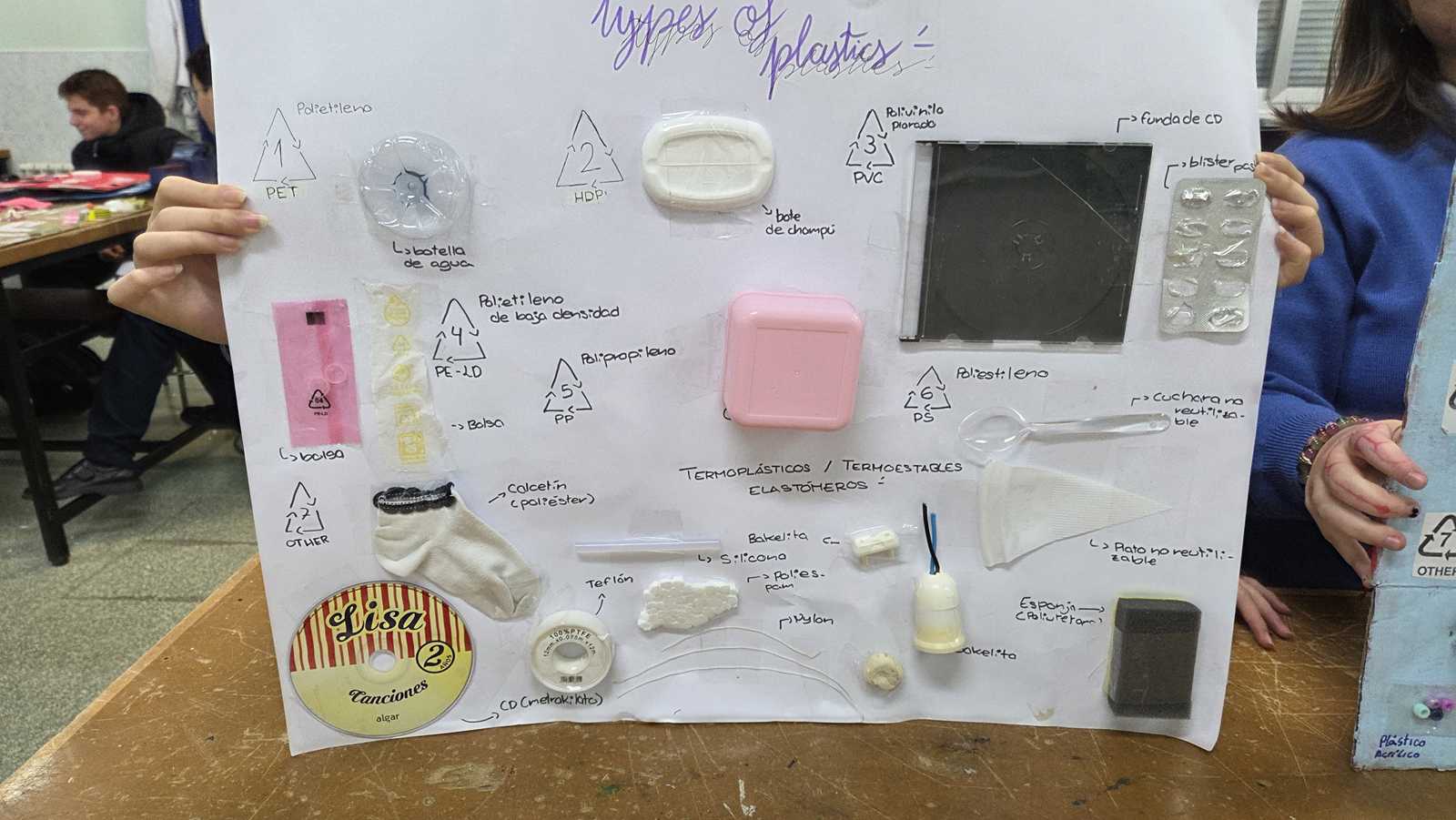
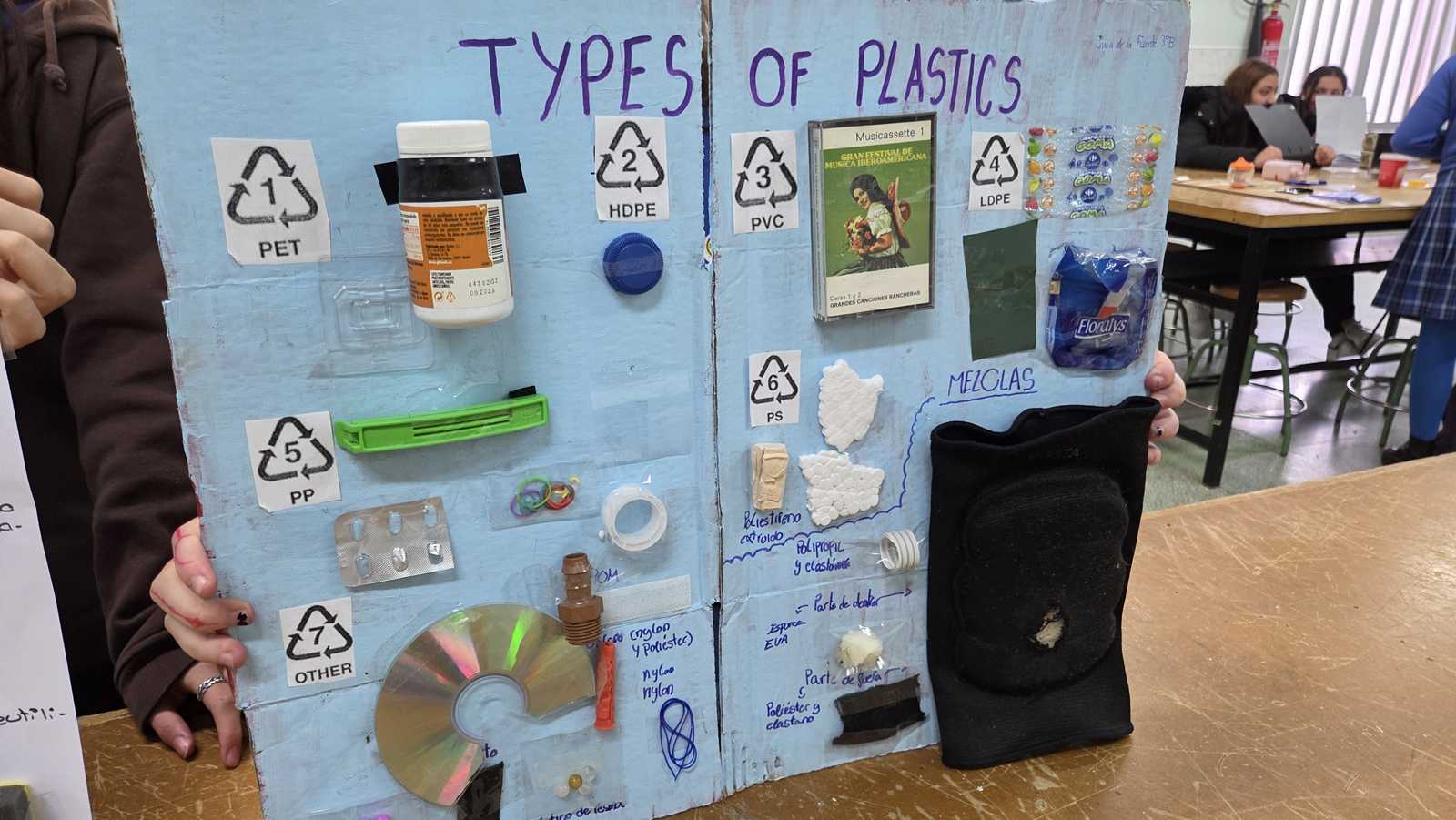
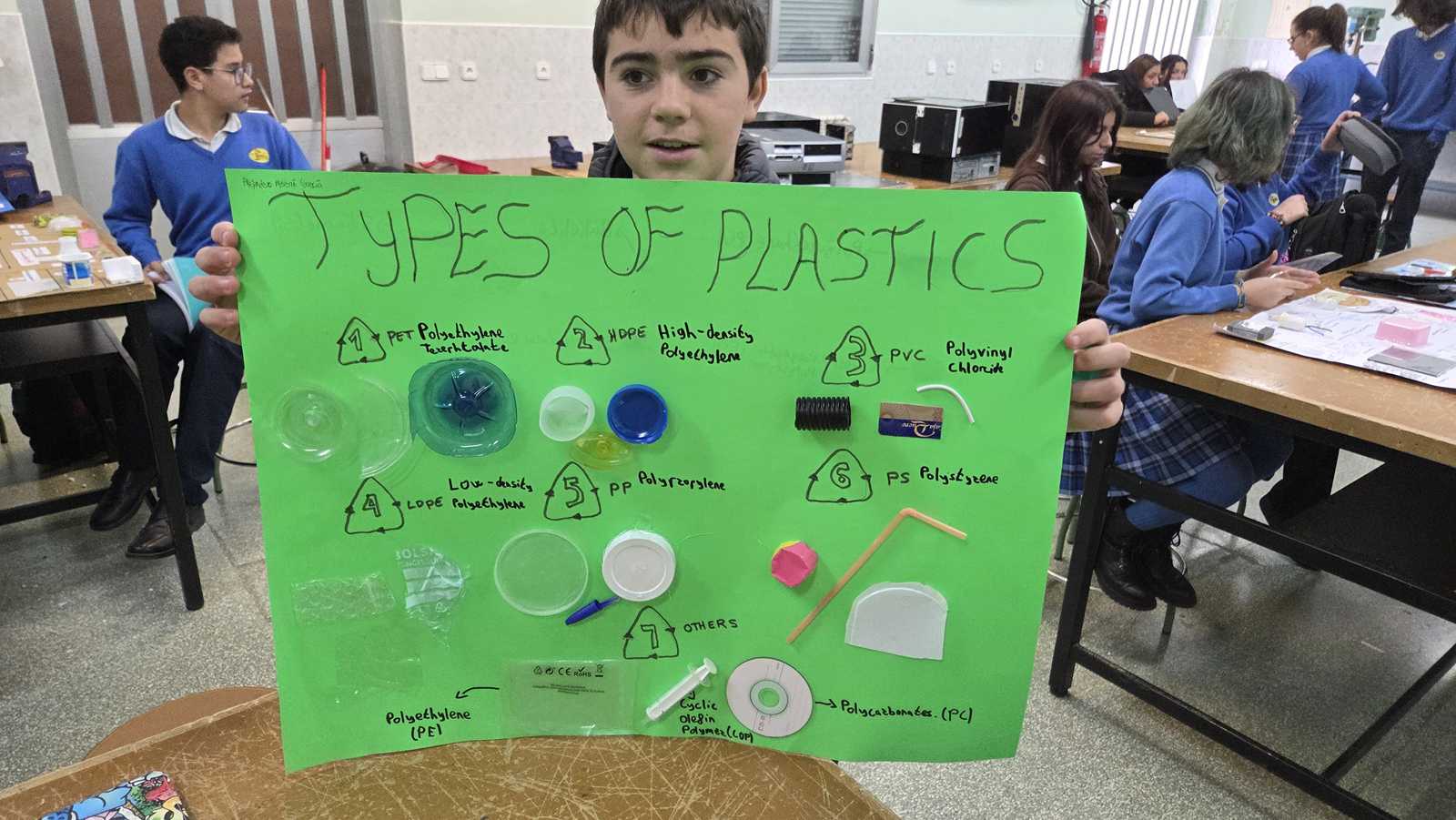
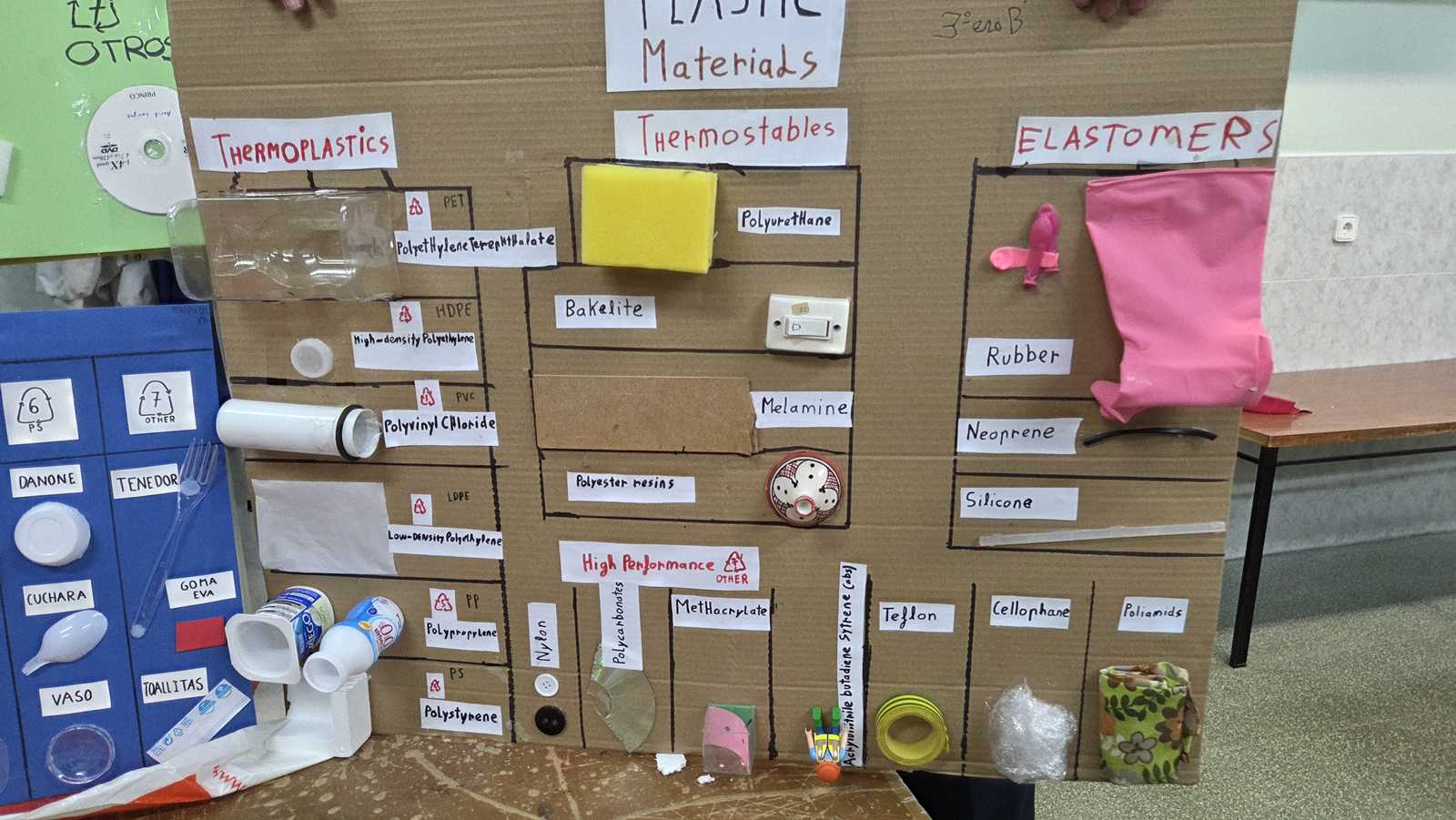
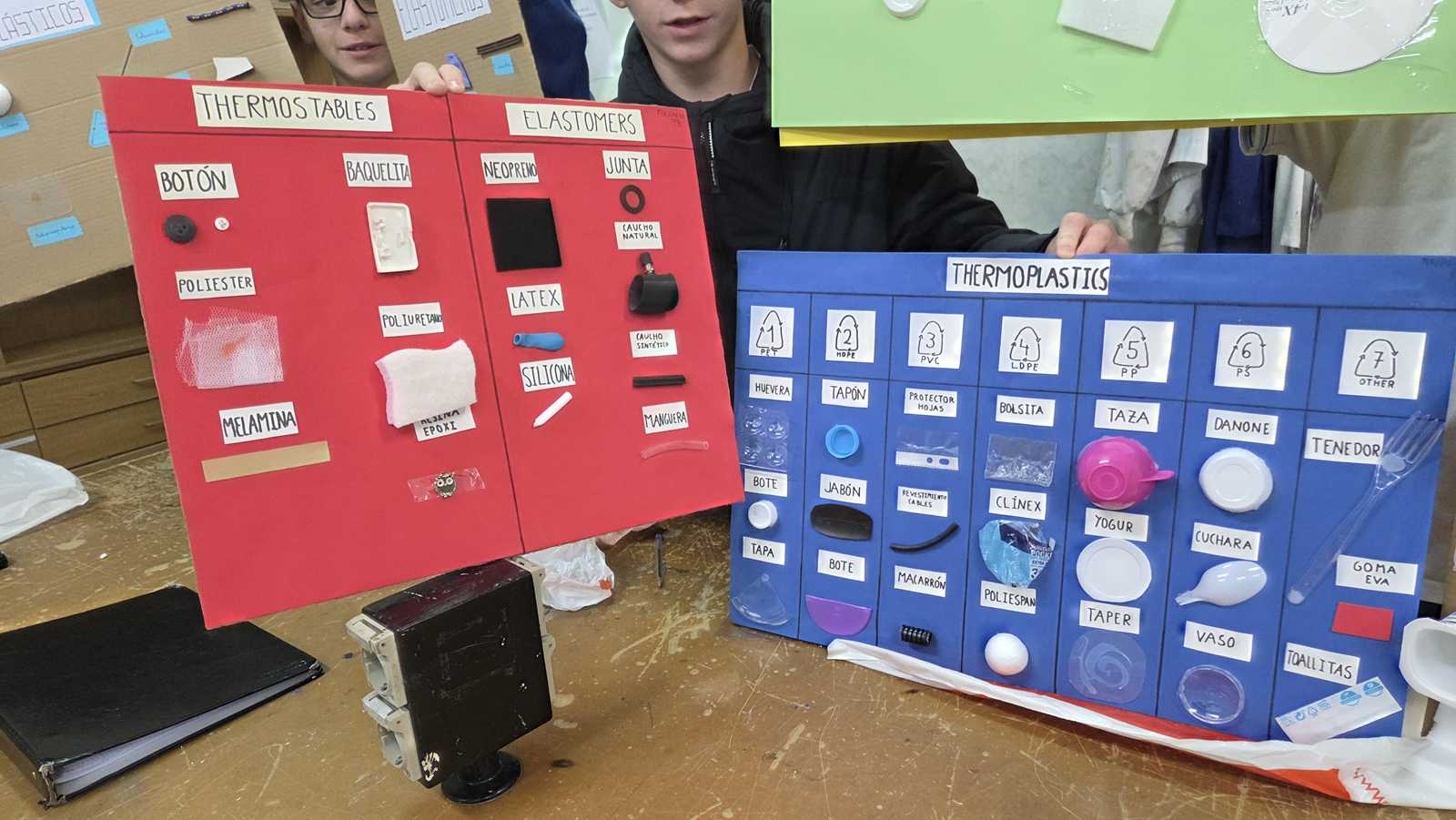
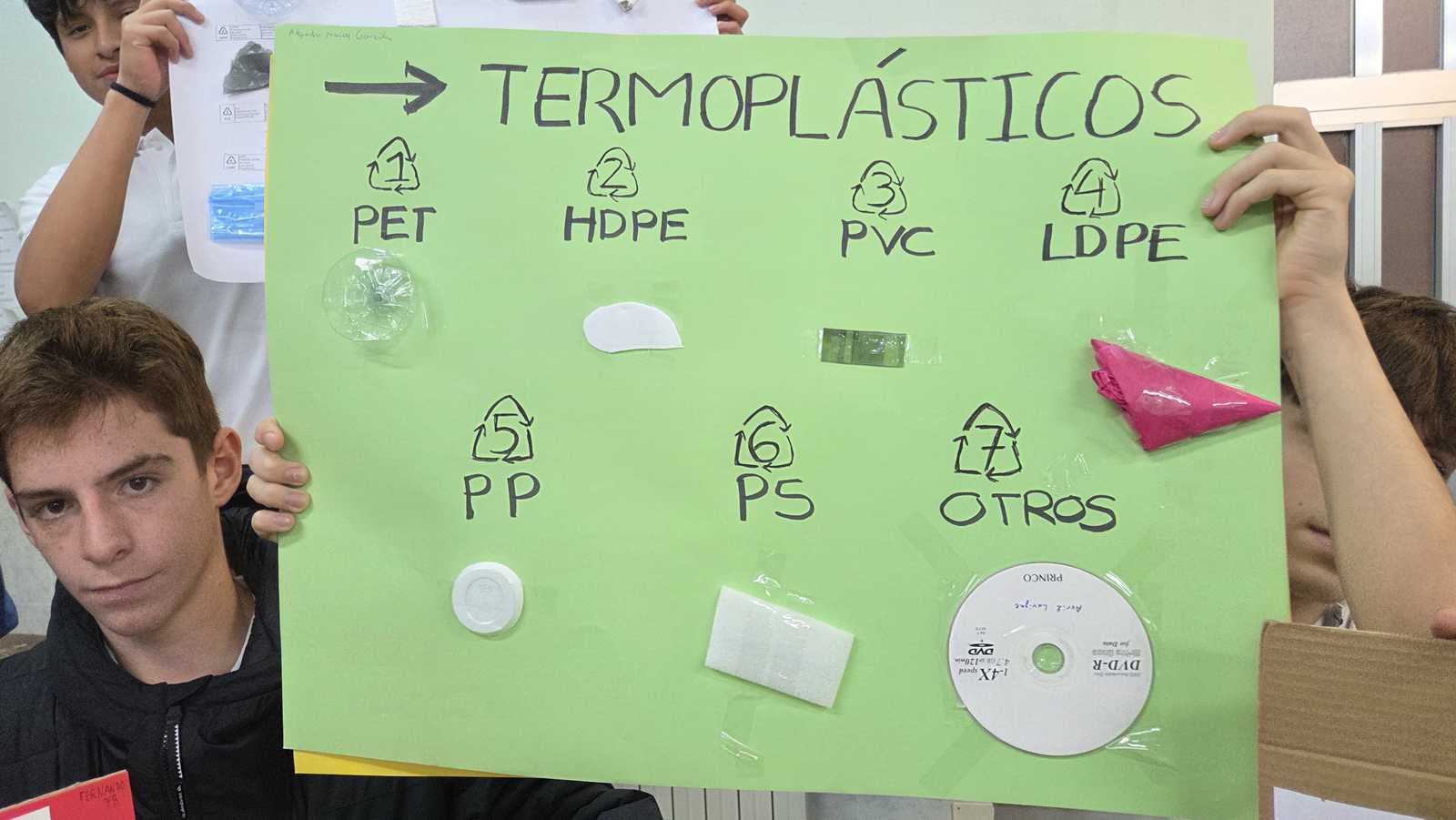
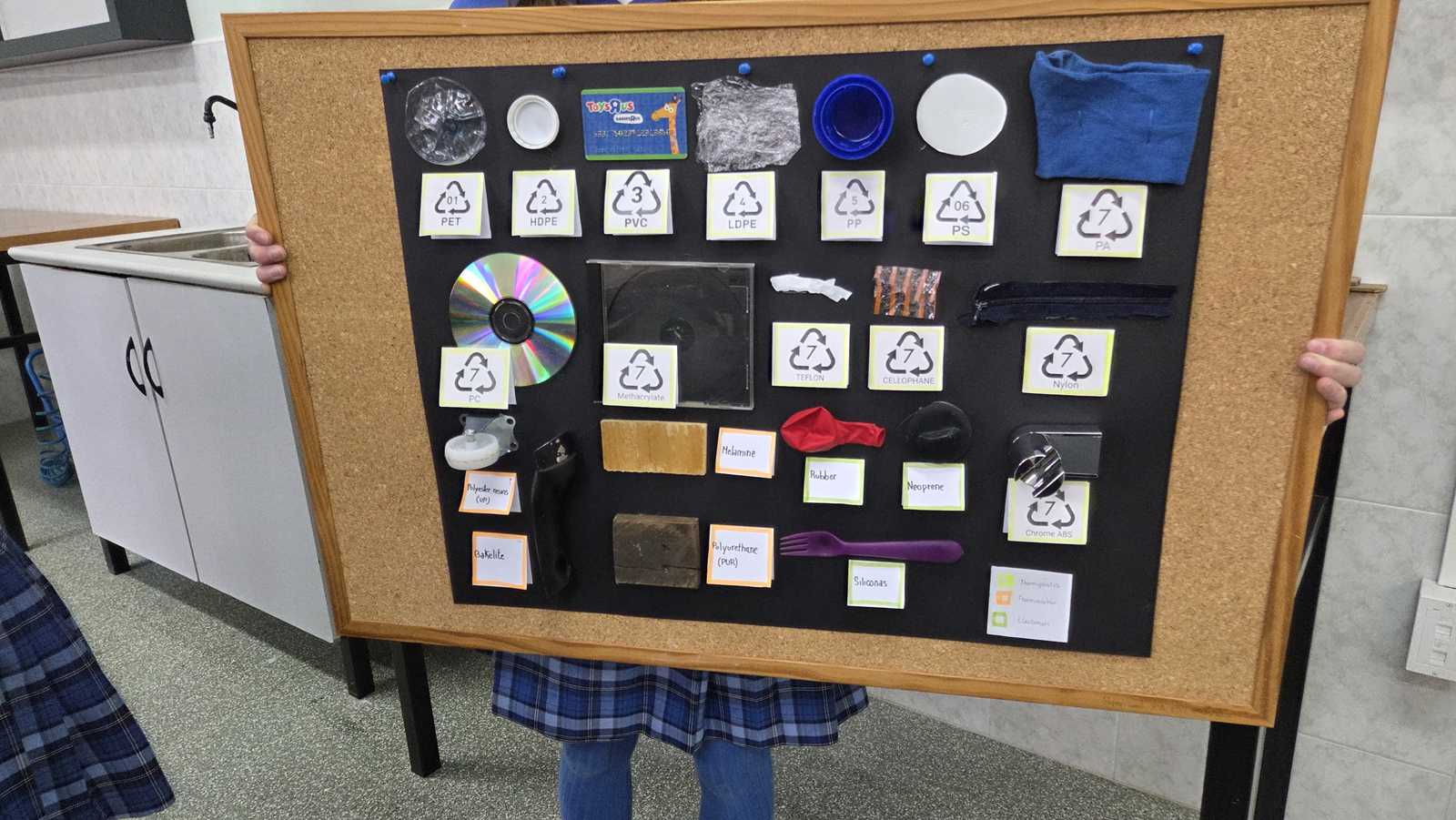
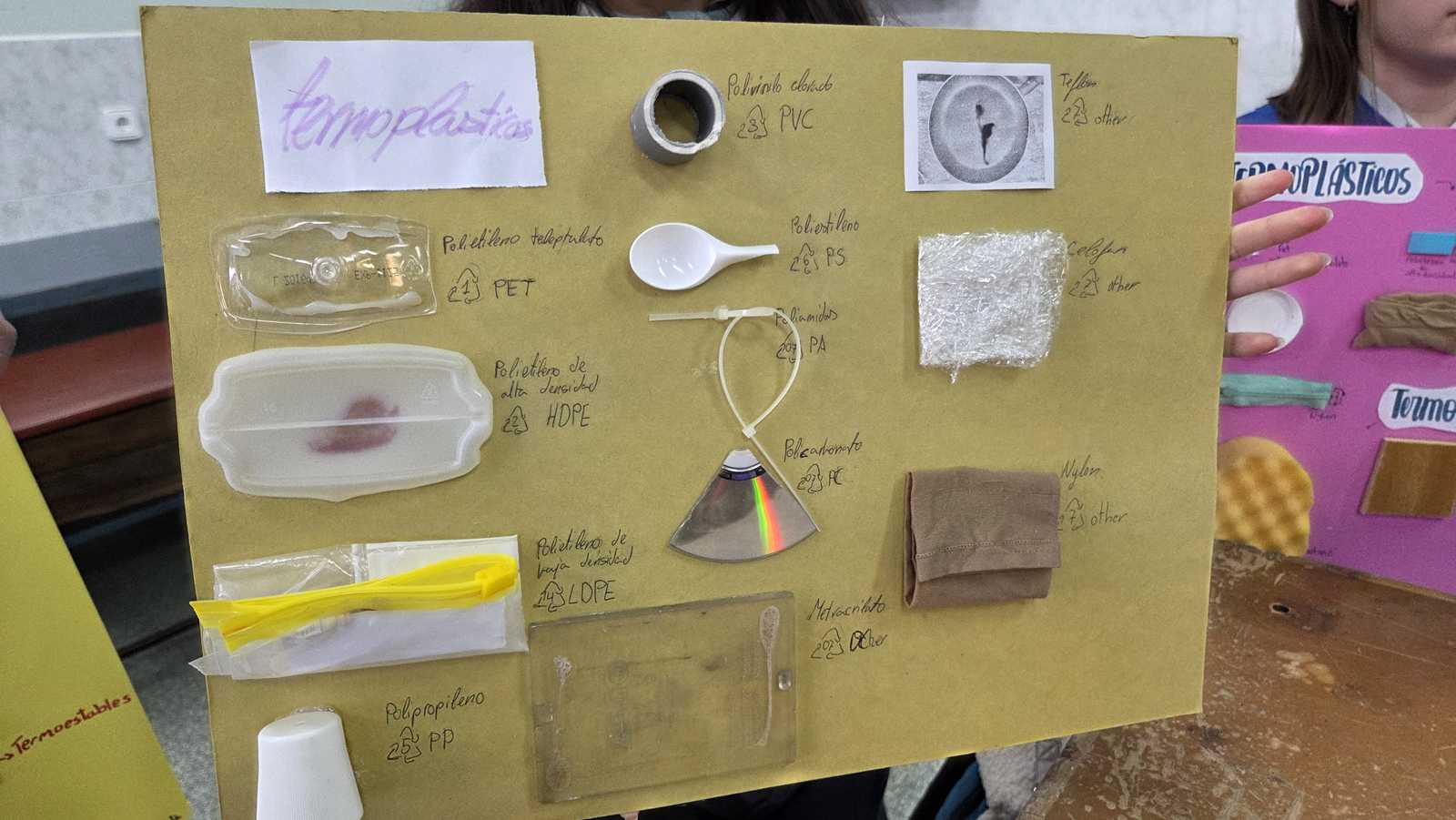
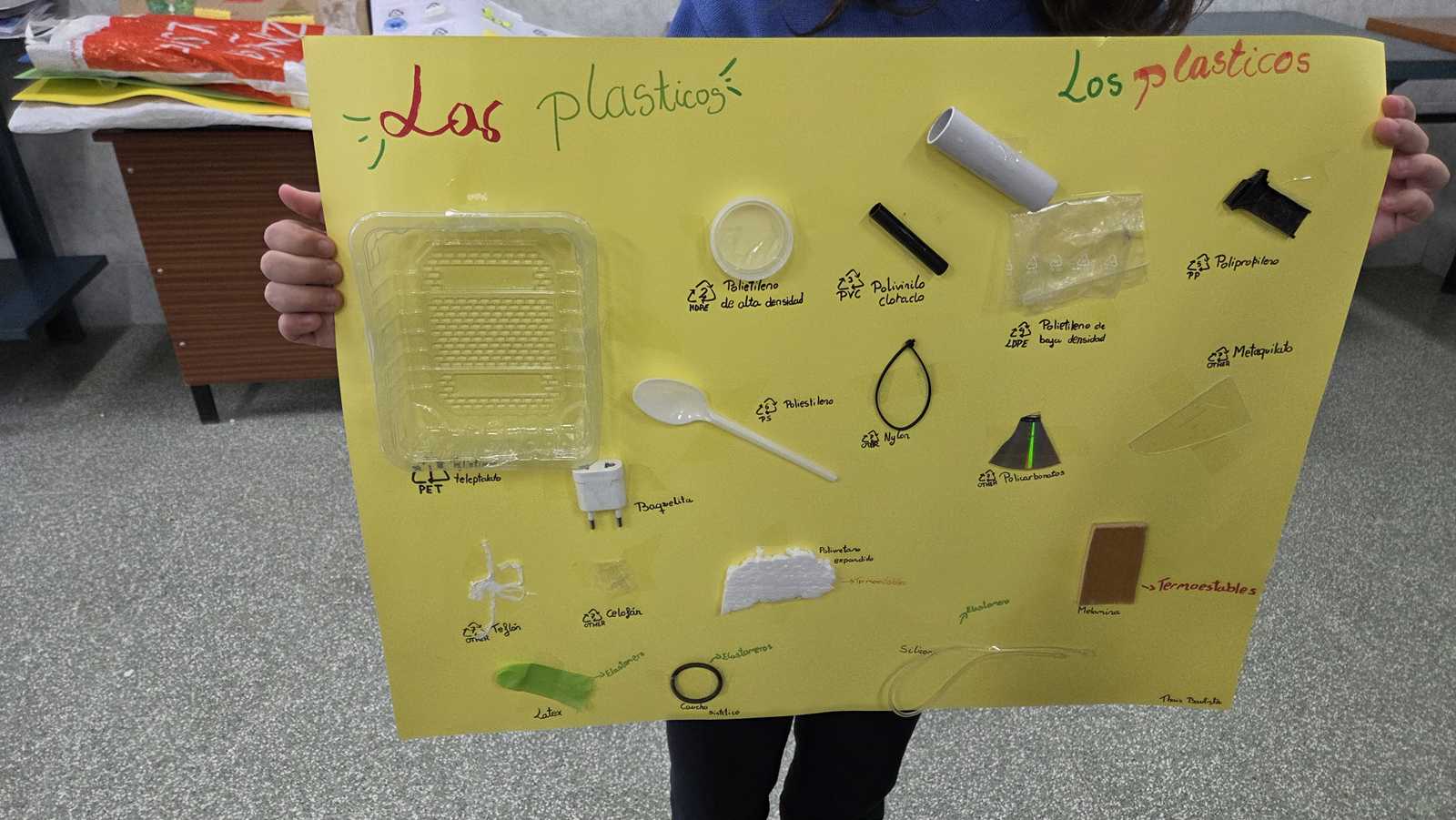
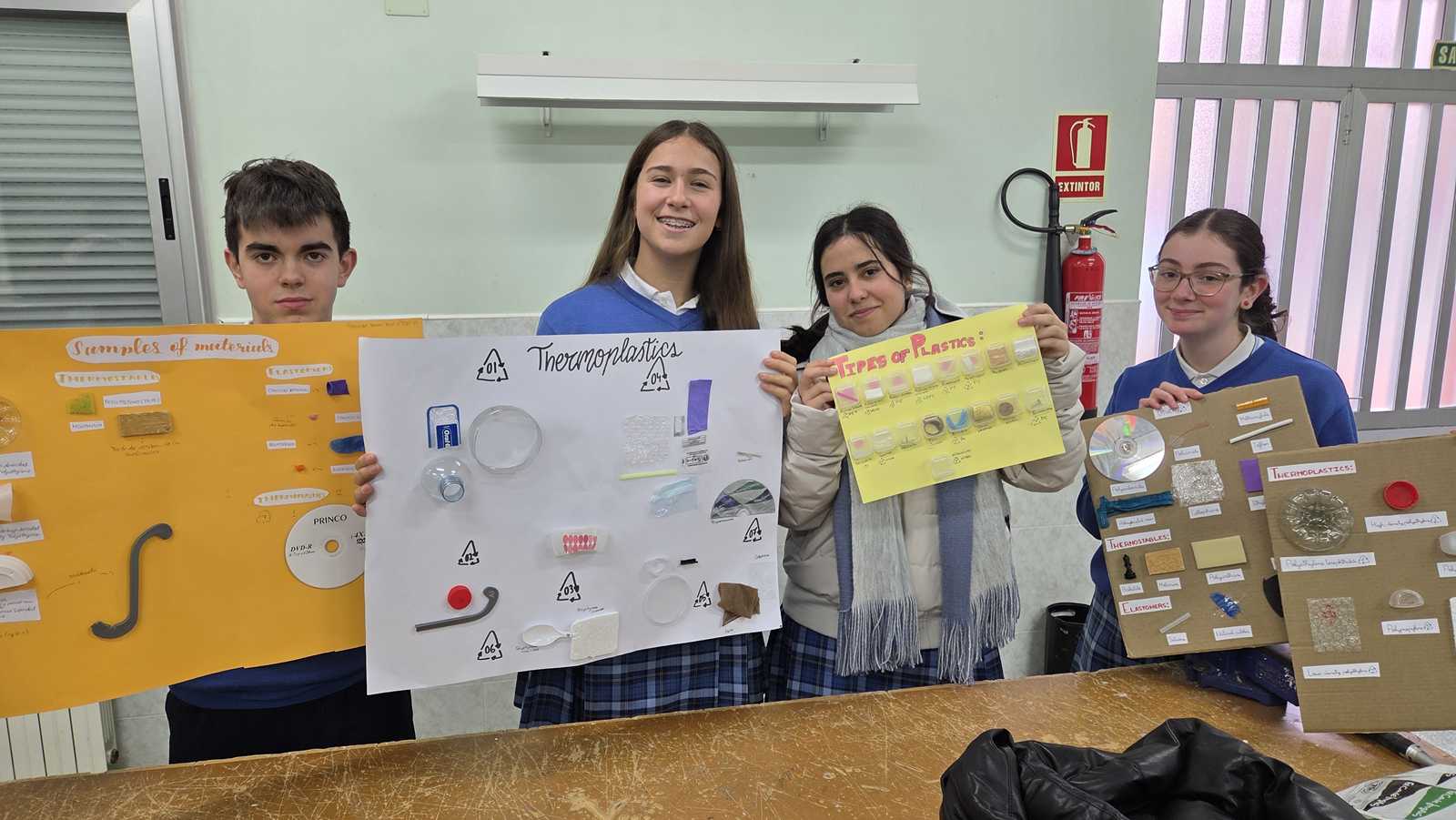
En el taller, cada grupo preparó un muestrario de distintos tipos de materiales plásticos: termoplásticos, termoestables y elastómeros. No eran nombres para memorizar sin más; al lado de cada etiqueta había ejemplos reales: trozos de goma, envases, cables, enchufes, cintas adhesivas, botellas, platos, teflón… Objetos que usamos cada día en casa y en el colegio. Al verlos todos juntos, ha quedado muy claro que el plástico no es algo lejano ni teórico: está en nuestra mochila, en la ropa deportiva, en el móvil, en el estuche, en la cocina, en el baño y hasta en el material del laboratorio.
A partir de esos muestrarios hemos hablado también de cómo se fabrican los plásticos. Hemos visto que proceden, en su mayoría, del petróleo y del gas natural, y que para transformarlos en el material que conocemos hace falta mucha energía y procesos industriales complejos. También hemos comentado que no todos los plásticos son iguales: algunos se pueden recalentar y moldear de nuevo, otros no; unos son muy blandos y elásticos, otros muy duros y resistentes al calor. Precisamente por eso resultan tan útiles: podemos diseñar un plástico para casi cualquier cosa que necesitemos.
En clase hemos identificado varios beneficios del plástico. Gracias a él, por ejemplo, se pueden fabricar jeringuillas, guantes y envases médicos que evitan infecciones y salvan vidas. Muchos cascos, rodilleras, protecciones deportivas y componentes de seguridad de los coches están hechos de plásticos especiales que absorben golpes y pesan poco. En la nevera tenemos alimentos que se conservan más tiempo gracias a envoltorios y envases plásticos que no dejan pasar ni el aire ni la humedad, lo que ayuda a reducir el desperdicio de comida. Y en tecnología lo vemos a cada momento: la carcasa del ordenador, las teclas, el ratón, los cables, las fundas de los móviles… Si todo eso fuera de metal o de vidrio, sería mucho más pesado, más caro y menos cómodo.
Entonces, si el plástico tiene tantas cosas buenas, ¿dónde está el problema? Lo hemos trabajado en el aula desde la parte ambiental. El principal problema es que usamos muchísimo plástico de “usar y tirar”. Botellas, vasos, envoltorios de un solo uso, bolsas, pajitas, bandejas… Objetos que utilizamos unos minutos y que pueden tardar décadas o siglos en degradarse. Cuando no se gestionan bien, acaban en vertederos, en ríos, en campos y, por desgracia, en el mar. Allí se rompen en trozos pequeños, los famosos microplásticos, que terminan en el estómago de peces, aves marinas y otros animales. Al final, esos microplásticos también pueden llegar a nosotros a través de la cadena alimentaria.
Otra idea importante que ha salido en clase es que el plástico no “desaparece”. Aunque lo tiremos correctamente, si no se recicla, se queda en algún sitio. Cuando se quema, genera gases contaminantes y contribuye al cambio climático; cuando se abandona en la naturaleza, contamina suelos y aguas. Hemos comentado que se están encontrando restos de plástico en lugares tan lejanos como las profundidades del océano o zonas polares donde casi no vive nadie. Es decir, nuestras decisiones diarias afectan a lugares que ni siquiera conocemos.
También hemos hablado de que reciclar está bien, pero no es suficiente. Muchos plásticos no se reciclan o solo se reciclan una vez. Además, el reciclaje siempre lleva un gasto de energía. Por eso hemos insistido en tres palabras clave que el comité ambiental del colegio repite a menudo: reducir, reutilizar y, después, reciclar. Reducir significa evitar plásticos que no necesitamos: decir no a una bolsa si llevamos mochila, evitar productos con un montón de envoltorios, preferir formatos grandes a muchos envases pequeños. Reutilizar es darle más vidas a los objetos: usar botellas y fiambreras reutilizables, reparar lo que se rompe, aprovechar envases para el huerto escolar o para manualidades. Solo cuando ya no hay otra opción, viene el reciclaje, separando bien los residuos en los contenedores adecuados.
Nos gustaría que llegue a las familias y a toda la comunidad educativa. Porque muchas de las decisiones sobre el uso del plástico se toman en casa: en la compra semanal, en cómo preparamos el almuerzo, en las fiestas de cumpleaños, en los materiales que elegimos para actividades y reuniones. Si en el colegio estamos promoviendo botellas reutilizables, reducción de envoltorios y uso responsable de los recursos, es mucho más efectivo cuando en casa se sigue la misma línea.
El plástico ha sido uno de los grandes inventos de la historia, y probablemente seguirá formando parte de nuestra vida. Lo que queremos aprender en el colegio es a convivir con él de manera responsable: aprovechando sus beneficios donde realmente aporta algo importante y reduciendo al máximo sus efectos negativos sobre el planeta. Si conseguimos que cada alumno y cada familia se haga esta pregunta antes de usar un envase o tirar un objeto, el trabajo de este taller, de las cartulinas y de las fotos que hoy compartimos habrá merecido la pena. Porque cuidar del planeta empieza por pequeños gestos, pero también por comprender de verdad qué hay detrás de los materiales que usamos todos los días.
English version
This term, in our 3rd year Technology class at Colegio Ntra. Sra. del Carmen in Valladolid, we have asked ourselves a very simple but very important question again: Is plastic good or bad? And the answer is not so easy. Plastic is part of our daily life and helps us in many things… but it is also causing serious problems for the planet. That is why we wanted to look at it “face to face” in the classroom, to touch it, classify it and think together about what we can do better.
In the workshop, each group prepared a display of different types of plastic materials: thermoplastics, thermosets and elastomers. These were not just names to memorise; next to each label there were real examples: pieces of rubber, packages, cables, plugs, sticky tape, bottles, plates, Teflon… Objects that we use every day at home and at school. When we saw them all together, it became very clear that plastic is not something distant or theoretical: it is in our backpack, in our sports clothes, in our mobile phone, in our pencil case, in the kitchen, in the bathroom and even in the lab equipment.
From these displays we also talked about how plastics are made. We saw that most of them come from oil and natural gas, and that to transform them into the material we know, a lot of energy and complex industrial processes are needed. We also commented that not all plastics are the same: some can be heated again and reshaped, others cannot; some are very soft and elastic, others are very hard and resistant to heat. This is exactly why they are so useful: we can design a plastic for almost anything we need.
In class we identified several benefits of plastic. Thanks to it, for example, we can make syringes, gloves and medical containers that prevent infections and save lives. Many helmets, knee pads, sports protections and safety parts in cars are made of special plastics that absorb impacts and are very light. In the fridge we have food that lasts longer thanks to plastic wrapping and containers that do not let air or moisture pass through, which helps to reduce food waste. And in technology we see plastic all the time: the computer case, the keys, the mouse, the cables, the mobile phone covers… If all of that were made of metal or glass, it would be much heavier, more expensive and less comfortable.
So if plastic has so many good things, where is the problem? We have worked on this in class from the environmental point of view. The main problem is that we use a huge amount of “single-use” plastic. Bottles, cups, single-use wrappers, bags, straws, trays… Objects that we use for a few minutes and that can take decades or even centuries to break down. When they are not managed properly, they end up in landfills, rivers, fields and, sadly, in the sea. There they break into very small pieces, the famous microplastics, which end up in the stomachs of fish, seabirds and other animals. In the end, those microplastics can also reach us through the food chain.
Another important idea that came up in class is that plastic does not “disappear”. Even if we throw it away correctly, if it is not recycled, it stays somewhere. When it is burned, it produces polluting gases and contributes to climate change; when it is abandoned in nature, it pollutes soil and water. We have talked about the fact that plastic remains are being found in places as far away as the deep ocean or polar areas where almost nobody lives. This means that our daily decisions affect places that we do not even know.
We have also talked about the fact that recycling is good, but it is not enough. Many plastics are not recycled at all or are only recycled once. In addition, recycling always uses energy. That is why we have insisted on three key words that the school’s environmental committee often repeats: reduce, reuse and then recycle. Reduce means avoiding plastics we do not need: saying no to a bag if we are carrying a backpack, avoiding products with lots of packaging, choosing big formats instead of many small packets. Reuse means giving objects more lives: using reusable bottles and lunch boxes, repairing what breaks, using containers for the school garden or for crafts. Only when there is no other option comes recycling, separating waste correctly into the right bins.
We would like this message to reach families and the whole educational community. Many decisions about the use of plastic are made at home: during the weekly shopping, when we prepare lunch, at birthday parties, and when we choose materials for activities and meetings. If at school we promote reusable bottles, less packaging and responsible use of resources, it works much better when the same happens at home.
Plastic has been one of the great inventions in history, and it will probably continue to be part of our lives. What we want to learn at school is to live with it in a responsible way: using its benefits where it really brings something important, and reducing its negative effects on the planet as much as possible. If we manage to help every student and every family to ask themselves this question before using a package or throwing something away, the work of this workshop, of the posters and of the photos we share today will have been worth it. Because taking care of the planet starts with small actions, but also with really understanding what is behind the materials we use every day.

 NSCarambiental -“Somos esperanza. Cuidamos la casa de todos”